About the College

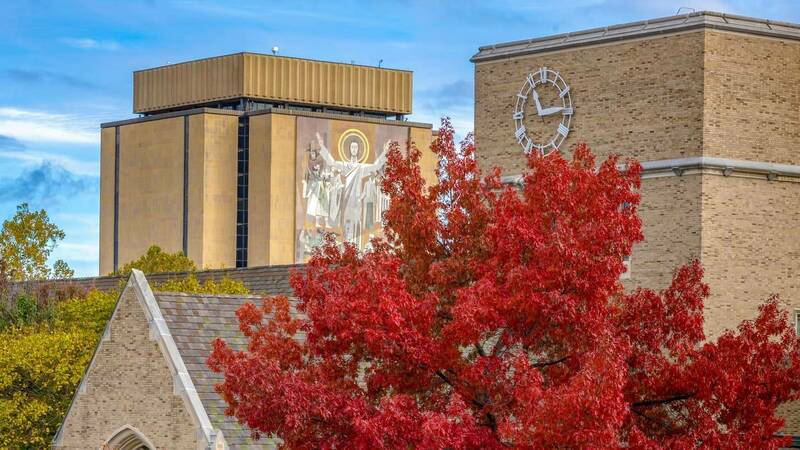
O'Shag_roofline

Welcome to the College of Arts and Letters at the University of Notre Dame. The College is an extraordinary place. It is Notre Dame’s oldest and largest college, at the core of the University’s distinctive mission. We believe that its students, faculty, and programs meld the best aspects of a residential liberal arts college, a major research university, and a Catholic institution of international standing.

The College’s 20 departments span three divisions—the arts, the social sciences, and the humanities—all of which contribute to the vibrant life of the College.

The Liberal Arts Tradition

The liberal arts ideal is evident in the intellectual passion that pulls students into majors as diverse as music, English, and economics. College is short; life is long. We believe that the most important decision a student can make is to pursue their intellectual interests while in college, using this rare opportunity to explore questions of great meaning and to develop the writing, analytical, and speaking skills nurtured especially well within the liberal arts. We know, too, that employers value exactly these skills, which enable graduates to flourish not just in their first job but well after graduation. (Watch these videos about the value of studying what you love and of studying the humanities.)

A Research Focus

The research university ideal is initially animated by our faculty, scholars known across the world for their original contributions to knowledge. They bring to the classroom and to conversations with students the latest knowledge of their fields and the skills and passions of active researchers. They push our students to become researchers as well and to develop the intellectual and linguistic skills to advance knowledge—even as undergraduates—with their own essays, experiments, and performances. During the past six years, the National Endowment for the Humanities has awarded the College faculty 44 fellowships, more than any other college or university in the country. Overall, the number of Arts and Letters faculty members who have received major national fellowships in the arts, humanities, and social sciences places us among the top six universities in the nation.

Our Catholic Mission

Arts and Letters is a core part of Notre Dame’s identity as a great Catholic institution of learning. We believe Notre Dame’s distinctive mission is to be at once excellent—on par with the very best universities in the country—and seriously religious. This Catholic mission informs the College’s commitment to philosophy and theology for all students, and our excellence on topics as diverse as religious history, Dante and Shakespeare, and children’s emotional development within the family. Catholicism is the world’s most global and multilingual institution, and our Catholic identity also informs our commitment to language acquisition and study abroad, in locations ranging from Uganda to Dublin to Australia. Our Catholicism requires us to link faith and ideas in a university milieu that too often presumes their separation despite the yearning of the larger intellectual world for reflective discussion on exactly these subjects. And our Catholicism encourages us to study and better understand the texts and practices of all the world’s great religious and ethical traditions.

In short, the College embodies the qualities that make the University of Notre Dame the world’s preeminent Catholic university. We are a liberal arts college—focused on cultivating understanding of the arts, humanities, and social sciences. We are a research university—supportive of faculty and student efforts to be original, creative scholars. And we are deeply Catholic—embracing a distinct intellectual and moral tradition from which we build our vibrant and diverse community.

We hope you find the prospect of studying and working in the College as exciting as we do. Feel free to explore this website to learn more about our mission and programs.

Again, welcome.

John T. McGreevy
I.A. O’Shaughnessy Dean of the College of Arts and Letters


Dean McGreevy on the Notre Dame Experiment


The College Viewbook

Check out the Viewbook for potential undergraduate students to read more about our programs, majors, and life in the College.


More Facts About the College

ND Arts and Letters fact book 2011 cover


Arts and Letters News

  • History Major Explores Work of Missionaries in Colonial Peru

    It is widely known that Spanish missionaries played a significant role in introducing Catholicism to the peoples of the Andes throughout the colonial period. Notre Dame senior history major Joseph VanderZee traveled to archives in Lima and Rome to dig a little deeper and find out what these early missionaries thought of the indigenous population—and how their attitudes affected the development of the Peruvian Church. Read More >

  • Theologian Gary Anderson Elected to American Academy of Jewish Research

    Gary Anderson, Hesburgh Professor of Catholic Theology at the University of Notre Dame, has been named a fellow of the American Academy of Jewish Research (AAJR). The AAJR is the oldest organization of Judaic scholars in North America, and fellows are nominated and elected by their peers. The group has approximately 100 members in the United States—and Anderson is one of a select few who are not Jewish. Read More >

  • Solving a Fascinating Puzzle

    Robert Goulding, an associate professor in the University of Notre Dame’s Program of Liberal Studies, was recently awarded a grant from the American Council of Learned Societies (ACLS) to support a research project that combines mathematics, philosophy, and Renaissance science. Goulding, who also teaches in the History and Philosophy of Science graduate program, says his work focuses on English scientist and mathematician Thomas Harriot (1560–1621), whom he calls “a really unusual figure” in intellectual history. Read More >

  • Microfinance Yields Mixed Results in Thailand, Economist Joseph Kaboski Finds

    Large-scale microfinance programs are widely used as a tool to fight poverty in developing countries, but a recent study by University of Notre Dame economist Joseph Kaboski and MIT colleague Robert Townsend suggests that microfinancing can have varying results for participants and may not be the most cost-effective use of funds for many situations. The study was published in a recent issue of Econometrica. Kaboski and Townsend used the Thai Million Baht Village Fund, one of the largest government microfinance initiatives of its kind, to evaluate and understand the benefits and disadvantages of microfinance interventions. Read More >