
As a political scientist, Luis Schiumerini has made it his job to find what makes democracy tick — what forces influence electoral outcomes, what incentivizes politicians, and how citizens make their government work. And it goes beyond a strong scholarly curiosity — he wants to learn how to make democracy better.
It’s the goal he had in mind when he wrote Incumbency Bias: Why Political Office is a Blessing and a Curse in Latin America (Cambridge University Press, 2025), which recently won the 2026 Robert A. Dahl Award from the American Political Science Association. The recognition marks his monograph as one of the best books written on democracy.
Established in honor of political theorist Robert A. Dahl, the award is presented to an untenured scholar who has produced high quality work on the subject. Schiumerini did not have tenure when he published Incumbency Bias, but he has since become an associate professor in the Department of Political Science at the University of Notre Dame.
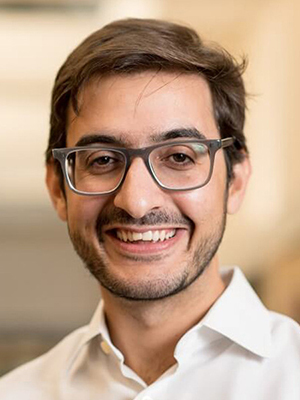
“The award is named for one of my heroes,” Schiumerini said. “When I teach what democracy means at Notre Dame, I assign Robert Dahl’s classic Polyarchy, so I’m very honored.”
Comparing electoral trends in Brazil, Chile, and Schiumerini’s home country of Argentina, Incumbency Bias examines how holding office impacts a politician’s chances of getting reelected.
“Above all else, regardless of whether you’re ideologically a good fit or competent or honest, just holding office itself changes your electoral fortunes,” Schiumerini said.
But whether incumbency is a positive or negative bias varies across countries and offices. In the United States and Argentina, incumbency is usually an advantage, but in Brazil, incumbents are less likely to be reelected. And according to Schiumerini’s research, this isn’t random.
“My book says this is actually the natural result of democratic elections working pretty much as we expect them to work,” Schiumerini said.
When voters cast their ballots, they assess the work of their leaders and representatives. Did they deliver public goods? Did they generate economic growth? Did they reduce unemployment? When the answers to these questions guide the polls, voters hold politicians accountable for their actions based on their performance, Schiumerini said.
But sometimes, politicians are held accountable for things they can’t really control. For example, Brazilian mayors have many responsibilities, including health, education, and transportation — a high policy scope. But because of how money is distributed in the Brazilian government, Schiumerini said, mayors often don’t have the resources to carry out their responsibilities — low incumbent capacity.
On the other hand, Argentinian mayors have many more resources and the discretion to use them. Also, unlike Brazilian mayors, they can incur as much debt as they deem necessary to carry out their duties. This higher incumbent capacity gives them a significant incumbency advantage.
“The mismatch between incumbent capacity and policy scope is what shapes the degree to which incumbents meet expectations across the world,” Schiumerini said.
Incumbency Bias contends that differences in incumbency bias result from differences in the alignment between citizen expectations and incumbency capacity . It’s the first book written on the subject at all, let alone in Latin America, and uses cutting-edge techniques to pin down causal effects.
“Building knowledge on politics can also inform citizens across the most important industries in society — economics, religion, education, culture. That’s why the research of political scientists matters.”
The book also comes at a time when incumbency is top of mind for political scientists, as the world has recently experienced and an anti-incumbency wave in national elections. Until Argentina’s last two presidential elections, no sitting president had ever failed to be reelected in the country. While Incumbency Bias focuses on subnational rather than presidential elections, the book’s theory could aid future research on the recent “incumbency curse” in national politics, Schiumerini said.
But what really makes the book special is how it puts a niche issue into the broader context of democracy’s global health.
“The book is ultimately asking, ‘Is this good for democracy?’” Schiumerini said. “It encourages scholars to think more about the institutional design of democracy, particularly how responsibilities are allocated across offices in relation to the capacity of those offices.”
Incumbency Bias reveals that even if elections are free and fair — no tally meddling, no voter intimidation, no media control — the results can be biased simply because of institutional discrepancies between politicians’ responsibilities and capabilities. And because democracy affects everyone, it’s something everyone should be learning and talking about, Schiumerini said.
“Building knowledge on politics can also inform citizens across the most important industries in society — economics, religion, education, culture,” he said. “That’s why the research of political scientists matters.”


