<?xml version="1.0" encoding="UTF-8"?>
<?xml-stylesheet type="text/xsl" href="/stylesheets/feed.atom.xml" media="screen"?>
<feed xml:lang="en-US" xmlns="http://www.w3.org/2005/Atom">
  <id>tag:al.nd.edu,2005:/news/latest-news</id>
  <link rel="alternate" type="text/html" href="https://al.nd.edu"/>
  <link rel="self" type="application/atom+xml" href="https://al.nd.edu/news/latest-news.atom"/>
  <id>tag:al.nd.edu,2005:/latest</id>
  <title>College of Arts &amp; Letters | Latest News</title>
  <updated>2026-10-08T14:16:00-04:00</updated>
  <link rel="alternate" type="text/html" href="https://al.nd.edu/"/>
  <link rel="self" type="application/atom+xml" href="https://al.nd.edu//news/latest-news.atom"/>
  <subtitle>Notre Dame’s College of Arts and Letters challenges graduate and undergraduate students in the liberal arts to ask the great questions as they pursue their intellectual passions in the arts, humanities, and social sciences.</subtitle>
  <entry>
    <id>tag:al.nd.edu,2005:News/186114</id>
    <published>2026-10-08T14:16:00-04:00</published>
    <updated>2026-10-08T14:16:54-04:00</updated>
    <link rel="alternate" type="text/html" href="https://al.nd.edu/news/latest-news/study-finds-positive-parenting-teaches-children-how-to-experience-joyand-could-lead-to-better-mental-health/"/>
    <title>Psychologist finds positive parenting teaches children how to experience joy — and could lead to better mental health</title>
    <summary type="text">
      <![CDATA[New research from Notre Dame psychologist Kaylin Hill has found that parents’ child-rearing methods during the preschool years coincide with how that child experiences joy and satisfaction across adolescence—a period during which the risk for mental health issues is at its highest. Her work seeks to help reduce the burden and strain of depression on individuals and families by finding ways to pinpoint its cause and intervene with timely support.]]>
    </summary>
    <content type="html">
      <![CDATA[<p>More than one in five adults in the US experience mental illness each year, according to data from the <a href="https://www.nami.org/mental-health-by-the-numbers/">National Alliance on Mental Illness</a>. And more than one in seven young people ages 6–17 experience a mental health disorder, with 50% of all mental illness occurring throughout one’s lifetime beginning by age 14 and 75% by age 24.</p>
<p>Psychologists have long espoused that how parents raise their children during their early years of life has a huge impact on their mental health and happiness as they grow up. Something as simple as praising or scolding a child can be deeply internalized and could determine whether or not that child struggles with depression, anxiety, or substance use as a teenager or young adult.</p>
<p>But how and where the connection is made between parenting behaviors and future susceptibility to a mental health disorder is harder to discern. Notre Dame psychologist <a href="https://psychology.nd.edu/people/kaylin-hill/">Kaylin Hill</a> has devoted the past 15 years of her career to better understanding emotions and depression — and how to break the cycle of intergenerational mental health issues.</p>
<p>Hill, an assistant professor in Notre Dame’s <a href="https://psychology.nd.edu/">Department of Psychology</a>, has found that parents’ child-rearing methods during the preschool years coincide with how that child experiences joy and satisfaction across adolescence — a period during which the risk for mental health issues is at its highest. <a href="https://www.nature.com/articles/s44271-026-00507-7">Her research was recently published</a> in <em>Communications Psychology</em>, part of the <em>Nature</em> journal suite of publications.</p>
<p>“In this project, we demonstrate that early parenting is associated with one of the largest neural indicators of risk for mental health concerns we know of to date,” said Hill, a clinical psychologist and faculty affiliate with Notre Dame’s <a href="https://shaw.nd.edu/">Shaw Center for Children and Families</a> and <a href="https://globalhealth.nd.edu/">Eck Institute for Global Health</a>.</p>
<p>Hill focuses her work on how to reduce the burden and strain of depression on individuals and families; and through her directorship of Notre Dame’s <a href="https://pal-lab.nd.edu/about/">Psychophysiology of Affect across the Lifespan (PAL) Lab</a>, she seeks to understand what makes those individuals vulnerable in the first place and how best to intervene.</p>
<h3>Finding the common thread between behaviors and future susceptibility</h3>
<p>Hill and her research team began their work by observing the one-on-one interactions and parenting behavior between 3-year-old children and their parents. They then compared that data to the development of neural reward responsiveness — how the brain responds to rewards or positive stimuli — of those same children at ages 9, 12, 15, and 18. This longitudinal study spanned 15 years and included 465 young people and their parents at Stony Brook University in New York, and was supported by a grant from the National Institute of Mental Health.</p>
<p>Previous research has shown that adequate reward processing in the brain is necessary for adolescents and adults to experience joy, excitement, and pleasure — a phenomenon that can even be seen in early childhood.</p>
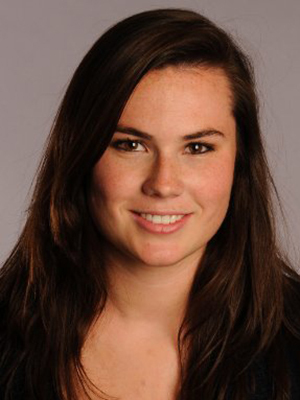
<figure class="image image-left"><img src="https://news.nd.edu/assets/622537/400x/kaylin_hill_headshot_600x600.jpg" alt="Headshot of a person with long brown hair, wearing a black top, smiling against a plain gray background." width="400" height="400">
<figcaption>Kaylin Hill is an assistant professor in Notre Dame’s Department of Psychology and a faculty affiliate with the Shaw Center for Children and Families and Eck Institute for Global Health. She also directs the PAL Lab, where she and her team seek to understand what makes individuals vulnerable to mental health issues and how best to intervene.</figcaption>
</figure>
<p>“This study is really the first of its kind that measures what early life experiences are associated with reward processing from childhood through late adolescence or early adulthood,” Hill said. “And reward processing seems to be one of those pieces to the puzzle of what may put us at risk for developing mental disorders. Being able to observe reward processing, and how it develops from ages 9 to 18, is really helpful to understanding depression risk.”</p>
<p>When watching the 3-year-old children and their parents interact in the laboratory at the start of the study, Hill and her team coded how often they saw positive parenting behaviors (displaying warmth, support, and encouragement) versus negative parenting behaviors (being harsh, heavy-handed, or overly intrusive).</p>
<p>Those coded interactions were compared to the data recorded from the brain’s responses to rewarding stimuli. With an electroencephalogram (EEG), which uses small electrodes attached to the scalp through a cap to record the brain’s electrical activity, the scientists were able to track reward processing at the brain level.</p>
<p>In this study, the researchers used money as the reward for winning a guessing game, which allowed them to look at the brain’s electrical signals in response to a win versus a loss. Because the EEG system is adaptable to a range of individuals across abilities and cognitive stages, the scientists were able to assess reward processing at the brain level beginning at age 9 and followed up at ages 12, 15, and 18.</p>
<p>Their findings indicated that the children who experienced higher levels of positive parenting got more excited about winning the money, while the children raised with a more negative parenting style were less enthusiastic.</p>
<p>“What we saw is that the more positive, and less negative, parenting behaviors we observed at age 3, the larger the brain’s reward response seemed to be for individuals across adolescence,” Hill said.</p>
<p>In other words, the more praise and affirmation children receive from their parents at a young age, the better they are at recognizing the joyful things in life. The work of Hill and her team demonstrated that positive parenting experienced in the early years may teach children’s brains how to respond to good things — fun activities, friendships, success, and well-being.</p>
<p>On the flip side, if a parent is particularly harsh or intrusive, that child’s brain may develop a low reward response — a difficulty experiencing pleasure and happiness that subsequently opens the door to sadness and despondency.</p>
<p>“Experiencing positive parenting seems to help facilitate reward processing, which is important for promoting physical and mental health,” added Hill, who is also a faculty affiliate with Notre Dame’s <a href="https://neuroscienceandbehavior.nd.edu/people/?">Neuroscience and Behavior</a> program and its <a href="https://neuroimaging.nd.edu/people/faculty-affiliates/">Human Neuroimaging Center</a>.</p>
<h3>Discoveries point toward possibility of early intervention</h3>
<p>The study’s findings point to an opportunity for intervention, which Hill believes may need to include parents and children. She says it is critical to support parents — perhaps even before their child is born — as well as children and adolescents, in order to address the series of events from parent behaviors observed at age 3 to child development from ages 3 to 18. She notes that while this study was observational, it gives important clues for how experiences and development may unfold over time.</p>
<p>Current research indicates that the most reliable and prominent predictor of depression is family history, paired with the experience of a stressful life event. According to Hill, this study opens up a world of possibilities in terms of what intervention could look like. “There’s something very important about early parent-child interactions and parenting behaviors,” she said. “And I love that because behaviors are so much more open to intervention than a genetic explanation to what is driving risk within families.”</p>
<p>Hill and her team hope their work can inform a broader conversation about how to prevent depression, one of the most prevalent and debilitating mental disorders. “We are trying to pull together a single strand — one explanation of likely many that exists — of what puts someone at risk and how we can intervene,” she said.</p>
<p><em><strong>Contact: </strong>Erin Blasko, director of media engagement, 574-631-4127, <a href="mailto:eblasko@nd.edu">eblasko@nd.edu</a></em></p>
<p class="attribution">Originally published by <span class="rel-author">Tracy DeStazio</span> at <span class="rel-source"><a href="https://news.nd.edu/news/study-finds-positive-parenting-teaches-children-how-to-experience-joyand-could-lead-to-better-mental-health/">news.nd.edu</a></span> on <span class="rel-pubdate">October 08, 2026</span>.</p>]]>
    </content>
    <link rel="enclosure" type="image/jpeg" href="https://al.nd.edu/assets/681986/early_parenting_mental_health_hill.jpg" title="Young girl with pigtails smiles while holding hands with an adult."/>
    <author>
      <name>Tracy DeStazio</name>
    </author>
  </entry>
  <entry>
    <id>tag:al.nd.edu,2005:News/186003</id>
    <published>2026-10-07T12:00:00-04:00</published>
    <updated>2026-10-05T12:49:31-04:00</updated>
    <link rel="alternate" type="text/html" href="https://al.nd.edu/news/latest-news/global-locations-foster-research-scholarly-partnerships-and-student-growth/"/>
    <title>Psychologist Laura Miller-Graff utilizes global locations to foster research, scholarly partnerships, and student growth</title>
    <summary type="text">
      <![CDATA[When Laura Miller-Graff traveled to Mexico City this past summer to teach a class on mental health to University of Notre Dame students, it wasn’t the first time she had taken her work in psychology abroad. She’s been doing it for…]]>
    </summary>
    <content type="html">
      <![CDATA[<p>When <a href="https://psychology.nd.edu/people/laura-miller-graff/">Laura Miller-Graff</a> traveled to Mexico City this past summer to teach a class on mental health to University of Notre Dame students, it wasn’t the first time she had taken her work in psychology abroad. She’s been doing it for the past 13 years. During that time, Miller-Graff, a professor and associate department chair in the <a href="https://psychology.nd.edu/">Department of Psychology,</a> has been drawing on <a href="https://global.nd.edu/">Notre Dame Global</a>’s locations as essential resources for both scholarship and student education.</p>
<p>Not only has she found a way to effectively leverage Notre Dame Global’s extensive network, but she has also partnered with the directors and colleagues in several of those locations to expand her research, teach innovative courses, and encourage her students to think beyond South Bend.</p>
<h2>Mexico City course introduces student growth, kindred spirit of scholarship</h2>
<p>Leveraging the <a href="https://mexico.nd.edu/">Notre Dame Mexico</a> location in Mexico City, Miller-Graff taught the course "Mental Health and Public Psychology in Mexico" in partnership with Universidad Iberoamericana, a Jesuit institution with a strong psychology department, also in Mexico City. The course integrated classroom instruction, visits to cultural sites, and independent student exploration of the city, as well as community-based learning assignments that included regular collaboration with Catholic Relief Services as the students supported them in considering how best to capture changes in social cohesion associated with their programs.</p>
<p>The collaboration provided opportunities to co-teach and to share scholarly work between the two universities. Faculty from Iberoamericana presented their own research to the students throughout the course, exposing them to new scholarly ideas on key mental health issues in Mexico and how researchers are working to address them.</p>
<figure class="image image-left"><img src="https://al.nd.edu/assets/619109/300x/laura_miller_graff_400x.jpg" alt="Laura Miller-Graff, presenting as a woman with long, straight, blonde hair, smiling, wearing a dark blue and white mottled shirt." width="300" height="400"></figure>
<p>“It’s important for students to see that there are meaningful things that we share, but there’s also very meaningful cultural variation in how people experience mental health and how different mental health care systems work,” said Miller-Graff, who is also the director of the <a href="https://shaw.nd.edu/">Shaw Center for Children and Families.</a></p>
<p>Introducing her students to stereotype-busting ideas, while also teaching a course that aligns with their majors, could not have been possible without the guidance and daily cooperation from Notre Dame Mexico staff and faculty. Miller-Graff said they played a central role in shaping the course curriculum, coordinating the university partnership, and ensuring the course ran smoothly and effectively.</p>
<p>“The Notre Dame Mexico staff was absolutely incredible to work with — delightful, supportive, and extraordinarily knowledgeable,” she said. “It’s really a special thing for our students to be able to interact with the staff at our global locations, but it’s also a huge support for faculty as well. The amount of support they provided for the course was completely invaluable — and the course would’ve run nowhere near as well without them.”</p>
<p>Not only were the local staff able to assist with logistical concerns in the city and surrounding areas as the students traveled and explored, but they also helped create the course syllabus by pairing particular activities that worked well for them in the past. This, said Miller-Graff, enabled her and her teaching team to provide an exceptional learning experience for the students.</p>
<p>“I loved hearing about the research the other faculty had done and what they were finding, and what they themselves found most interesting and innovative about their work,” Miller-Graff said. “Sitting there with my students, I found that to be an incredibly enriching experience. And that partnership was all coordinated by Notre Dame Mexico.”</p>
<h2>Collaborative work brings healing, intervention to Palestinian families</h2>
<p>One project that has occupied Miller-Graff and colleague <a href="https://psychology.nd.edu/people/e-mark-cummings/">Mark Cummings</a>, the William J. Shaw Center for Children and Families Professor of Psychology, for more than a decade is the <a href="https://kellogg.nd.edu/news/miller-graff-collaborates-develop-support-program-palestinians-impacted-violence-gaza-west-bank">Promoting Positive Family Futures</a> program. Developed in partnership with the Palestinian Counseling Center and further adapted in partnership with Catholic Relief Services, the family-focused intervention program addresses the mental health needs of Palestinian families living under chronic conflict in both the West Bank and Gaza.</p>
<p>In response to a community- identified need, Miller-Graff and Cummings worked with the Palestinian Counseling Center to co-develop the program to support mental health, coping and well-being, communication, and family relationships between Palestinian parents and their adolescent children—many of whom have endured chronic and sustained violence.</p>
<p>After conducting successful pilot studies with 25 families in the West Bank in 2017, supported in part by a Notre Dame Global grant, the team moved forward in collaboration with Catholic Relief Services to conduct a second study in Gaza in 2019 with 62 families. Eventually, the project secured National Institutes of Health funding for a larger-scale trial involving 300 Palestinian families. Data collection and analysis for these studies are currently underway, with Miller-Graff and Cummings hoping to publish later this year, in collaboration with their research team.</p>
<p>“Our focus was to get to know the community and understand some of the mental health needs of Palestinian families,” Miller-Graff said. “Beyond crisis support and emergency response, we wanted to know what was going well in terms of provision of mental health services and what were some of the more critical needs.”</p>
<figure class="image image-left"><img src="https://ndworks.nd.edu/assets/680378/laura_mark_gabi_photo_web.jpg" alt="Three people stand in front of cypress trees with a building in the background." width="600" height="338"></figure>
<p><a href="https://jerusalem.nd.edu/">Notre Dame Jerusalem</a>, located at Notre Dame’s Tantur campus, served as a home base for the team, providing practical and intellectual support throughout the study and offering meeting spaces, logistical coordination, and an interdisciplinary scholarly community.</p>
<p>“The staff at Notre Dame Jerusalem are just exceptional in every sense of the word—thoughtful, engaged scholars who are really thinking through in a meaningful way what these global centers can be in terms of teaching and research,” Miller-Graff said.</p>
<p>For Miller-Graff, working with Notre Dame Global allowed her to take her work in directions she never anticipated, helping her grow and establish meaningful and long-lasting connections.</p>
<p>“Notre Dame’s sustained commitment to these locations is of huge value in terms of doing international work,” she said. “They provide faculty an opportunity to enter into global research without having to start from the ground up, which helps remove barriers that might prevent them from participating.”</p>
<p class="attribution">Originally published by <span class="rel-author">Tracy DeStazio, Story Development</span> at <span class="rel-source"><a href="https://ndworks.nd.edu/news/global-locations-foster-research-scholarly-partnerships-and-student-growth/">ndworks.nd.edu</a></span> on <span class="rel-pubdate">September 07, 2026</span>.</p>]]>
    </content>
    <link rel="enclosure" type="image/jpeg" href="https://al.nd.edu/assets/681471/027a2944web.jpg" title="A woman in a light shirt and jeans holds a device and stands by a digital piano in a classroom with students seated in a circle."/>
    <author>
      <name>Tracy DeStazio, Story Development</name>
    </author>
  </entry>
  <entry>
    <id>tag:al.nd.edu,2005:News/186002</id>
    <published>2026-10-05T12:38:00-04:00</published>
    <updated>2026-10-05T12:39:11-04:00</updated>
    <link rel="alternate" type="text/html" href="https://al.nd.edu/news/latest-news/three-study-abroad-programs-in-and-counting-br-nd-student-and-parent-reflect-on-value-of-global-education/"/>
    <title>Three study abroad programs and counting: Arts &amp; Letters junior reflects on value of global education</title>
    <summary type="text">
      <![CDATA[This upcoming spring, University of Notre Dame junior Audrey Fremeau will fly out for her fourth study abroad program. She first got the travel bug in high school, when she participated in Notre Dame’s pre-college program in London.…]]>
    </summary>
    <content type="html">
      <![CDATA[<p>This upcoming spring, University of Notre Dame junior Audrey Fremeau will fly out for her fourth study abroad program.</p>
<p>She first got the travel bug in high school, when she participated in Notre Dame’s <a href="https://precollege.nd.edu/study-abroad/london/">pre-college program in London.</a> Then, the summer after her sophomore year at Notre Dame, she took advantage of Notre Dame Global (NDG)'s <a href="https://studyabroad.nd.edu/programs/"> summer programs </a>applied to the "Poland Summer: International Law &amp; Politics of Genocide" program. Last summer, she opted for a more focused, career-building opportunity and completed the <a href="https://ndi-sa.nd.edu/_portal/tds-program-brochure?programid=10121">Global Professional Experience (GPE)</a> program in Rome. And next semester, she’ll head to Italy for the second time for the Rome undergraduate program.</p>
<p>Despite this being her fourth trip abroad, she’s just as excited as the first time — though decidedly less nervous.</p>
<p>“When I first got to Rome this past summer, it was a lot to learn,” she said. “Being from South Bend, I’d never used public transportation before. Now I have that nailed down, so I can use those skills to take advantage of the city more — explore more neighborhoods, interact with locals, practice my Italian.”</p>
<p>A visual communication design major, with minors in Italian and marketing, Audrey has deliberately chosen each of her programs. For her, they’re not just trips abroad — they’re intentional learning opportunities to shape and expand her studies.</p>
<p>“I think even before she came to Notre Dame, she knew she was interested in the humanities and arts and letters, so all the places she’s been to have fit into that," said her mother,<strong> </strong>Molly Fremeau, who is the creative program director of marketing for <a href="https://uoes.nd.edu/">University Operations, Events, and Safety.</a> “And I think all these trips, and the classes that she’s taken when she’s been abroad, have helped her decide on her major. It will also help inform where she goes after college because she’s seen all these other cities and is learning what she likes and what she doesn’t like.”</p>
<p>With more than 60 semester and academic-year programs and nearly 40 summer programs to choose from, NDG provides students with study abroad opportunities like Audrey's. When chosen with intention, study abroad programs can be more than exciting travel opportunities for students — they’re transformative encounters with new places, people, and versions of themselves.</p>
<p>Freameu can attest to this, having witnessed the change in her daughter after the very first program. And the more programs Audrey participates in, the more her mother can see certain traits grow.</p>
<p>“Each experience has offered her something different. The London pre-college program was an introduction to college life, the Poland program was academically rigorous and exposed her to researching and writing in a new way, her GPE in Rome was her first experience living and working away from home,” she said. “I think definitely her confidence and her independence have grown as a result. Even while preparing for each trip, she’s grown to know what she needs, what to pack, how to be prepared.”</p>
<p>For Freameu, there’s comfort in knowing her daughter is equipped to handle the experiences that will greet her overseas. But she also knows that you can’t plan for everything and trusts that Audrey will face the challenges head-on.</p>
<p>“She’s been so fearless about all of these trips,” she said. “I’m proud that she’s so curious about other places and has taken advantage of every opportunity.”</p>
<p>That curiosity has driven Audrey to explore more, experience more, and grow more.</p>
<p>“I’ve lived in South Bend my entire life, so I feel that it’s really important for me to get out and see as much as I can,” she said.</p>
<p><script src="https://al.nd.edu/javascripts/lb.js?v=2023-05-17" defer></script><ul id="gallery-1066" class="gallery-lb gallery-1066" data-count="3"><li><a href="https://ndworks.nd.edu/assets/680391/fullsize/audrey_photo_rome_web.jpg" title="" data-title=""><img src="https://ndworks.nd.edu/assets/680391/600x600/audrey_photo_rome_web.jpg" alt="Two smiling young women in &quot;I heart Rome&quot; shirts stand before the Colosseum at night." width="600" height="600" loading="lazy"></a></li><li><a href="https://ndworks.nd.edu/assets/680392/fullsize/audrey_fremeau_1web.jpg" title="" data-title=""><img src="https://ndworks.nd.edu/assets/680392/600x600/audrey_fremeau_1web.jpg" alt="Woman in green dress smiles in a European street with shops and diners." width="600" height="600" loading="lazy"></a></li><li><a href="https://ndworks.nd.edu/assets/680393/fullsize/audrey_fremeau_2web.jpg" title="" data-title=""><img src="https://ndworks.nd.edu/assets/680393/600x600/audrey_fremeau_2web.jpg" alt="Woman photographs Big Ben and the Houses of Parliament on a cloudy day." width="600" height="600" loading="lazy"></a></li></ul><script>document.addEventListener("DOMContentLoaded", function(){var lightbox = new Lightbox({showCaptions: true,elements: document.querySelector(".gallery-1066").querySelectorAll("a")});});</script></p>
<p>Learn more about ND Global’s study abroad programs at <a href="http://studyabroad.nd.edu/programs">studyabroad.nd.edu/programs</a></p>
<p class="attribution">Originally published by <span class="rel-author">Jessie Carson, Notre Dame Global</span> at <span class="rel-source"><a href="https://ndworks.nd.edu/news/three-study-abroad-programs-in-and-counting-br-nd-student-and-parent-reflect-on-value-of-global-education/">ndworks.nd.edu</a></span> on <span class="rel-pubdate">September 07, 2026</span>.</p>]]>
    </content>
    <link rel="enclosure" type="image/jpeg" href="https://al.nd.edu/assets/681466/img_3970web.jpg" title="Three people smile for a selfie with food graphics in the background."/>
    <author>
      <name>Jessie Carson, Notre Dame Global</name>
    </author>
  </entry>
  <entry>
    <id>tag:al.nd.edu,2005:News/185934</id>
    <published>2026-10-01T17:00:00-04:00</published>
    <updated>2026-10-02T07:58:16-04:00</updated>
    <link rel="alternate" type="text/html" href="https://al.nd.edu/news/latest-news/pulitzer-prize-winning-author-yiyun-li-to-speak-at-notre-dame/"/>
    <title>Pulitzer Prize-winning author Yiyun Li to speak at Notre Dame</title>
    <summary type="text">
      <![CDATA[Yiyun Li, winner of the 2026 Pulitzer Prize for memoir and acclaimed author, will preview her new novel and speak about her work for the…]]>
    </summary>
    <content type="html">
      <![CDATA[<p><a href="https://www.barclayagency.com/speakers/yiyun-li/">Yiyun Li</a>, winner of the 2026 Pulitzer Prize for memoir and acclaimed author, will preview her new novel and speak about her work for the<a href="https://asia.nd.edu/events/2026/10/06/asian-american-distinguished-speaker-series-with-yiyun-li/"> Asian American Distinguished Speaker Series</a> lecture at 5:30 p.m. on Oct. 6 (Tuesday) in the Eck Visitors Center at the University of Notre Dame. Author <a href="https://english.nd.edu/people/azareen-van-der-vliet-oloomi/">Azareen Van der Vliet Oloomi</a>, the Dorothy G. Griffin College Professor of English, will moderate the livestreamed event, which is free and open to the public.</p>
<p>“Yiyun Li is a singular author, and we are honored to celebrate the launch of her newest work,” said <a href="https://keough.nd.edu/about/faculty-staff-directory/kyle-jaros/">Kyle Jaros</a>, interim director of the Liu Institute for Asia and Asian Studies, which organizes the event. “The courage of Li’s prose is remarkable, as is her ability to bridge continents in writing.”</p>
<p>Born in China and raised amid the final years of the Mao Zedong era and the transformations of reform, Li moved to the United States in 1996, studying immunology at the University of Iowa before turning to writing fiction and becoming a US citizen in 2012. Li now serves as the Robert F. Goheen Professor in the Humanities and professor of creative writing at Princeton University.</p>
<p>In May, Li won the Pulitzer Prize in Memoir or Autobiography and the Andrew Carnegie Medal for Excellence in Nonfiction, awarded by the American Library Association, for her 2025 memoir “Things in Nature Merely Grow,” her account of losing her younger son to suicide six years after her older son died in the same manner. Suicide and mental health will be topics of Li’s conversation.</p>
<p>“Yiyun Li is one of our greatest writers. Her sentences are live wires: precise and ephemeral in equal measure,” said Van der Vliet Oloomi, a Liu Institute faculty fellow. “Li has that rare, unnameable gift of transforming the reader who encounters her work. She writes about grief, friendship, and what it means to be a writer with extraordinary intimacy and mastery.”</p>
<p>A member of the American Academy of Arts and Sciences and the American Academy of Arts and Letters, Li is the recipient of the 2021 Literature Award from the American Academy of Arts and Letters, as well as a Whiting Award, MacArthur Fellowship, Guggenheim Fellowship, the PEN/Malamud Award, the PEN/Faulkner Award, Princeton University’s Howard T. Behrman Award for Distinguished Achievement in the Humanities, and the Royal Society of Literature’s International Writers Award. Her work has been translated into more than 20 languages and has appeared in <em>The New Yorker</em>, “The Best American Short Stories,” and “The PEN/O. Henry Prize Stories,” among other publications.</p>
<figure class="image image-right"><a href="https://asia.nd.edu/events/2026/10/06/asian-american-distinguished-speaker-series-with-yiyun-li/#book"><img src="https://asia.nd.edu/assets/657826/300x/web_book_cover_music_against_the_night_9780374613051.jpg" alt="Large music staff overlays a harbor with boats and figures dressed in late eighteenth century clothing." width="300" height="450"></a>
<figcaption>Cover by Macmillian Publishers</figcaption>
</figure>
<p>Li’s visit will precede the official launch on Oct. 13 of<em> Music Against the Night</em> by <a href="https://us.macmillan.com/books/9780374613051/musicagainstthenight/">Macmillan Publishers</a>, the first work in a trilogy that follows two eighteenth-century musicians as they pursue their ambitions from Dublin and French India across Europe, while grappling with political and artistic upheaval and sacrifice. The novel will be for sale at Li’s Notre Dame appearance.</p>
<p>The Liu Institute for Asia and Asian Studies organizes the <a href="https://asia.nd.edu/events/asian-american-distinguished-speaker-series/">Asian American Distinguished Speaker Series</a>, which honors innovative, creative, and effective Asian American leaders and celebrates their contributions.</p>
<p>This year’s lecture is sponsored with support from the Nanovic Institute for European Studies, <a href="https://eastasian.nd.edu/">Department of East Asian Languages and Cultures</a>, <a href="https://english.nd.edu/">Department of English</a>,<a href="https://americanstudies.nd.edu/"> Department of American Studies</a>, <a href="https://genderstudies.nd.edu/">Gender Studies Program</a>,<a href="https://english.nd.edu/creative-writing/"> Creative Writing Program</a>, <a href="https://writing.nd.edu/writing-center/">University Writing Center</a>, <a href="https://raceandresilience.nd.edu/">Initiative on Race and Resilience</a>, and the <a href="https://socialconcerns.nd.edu/">Institute for Social Concerns</a>.</p>
<p>Part of Notre Dame’s<a href="https://keough.nd.edu/"> Keough School of Global Affairs</a>, the Liu Institute promotes awareness, understanding and knowledge of Asia through administering a supplementary major and minor in Asian studies, supporting student and faculty scholarship, organizing public events, and facilitating interaction and exchanges with partners in Asia. The institute was established by a gift from the RM Liu Foundation that supports the philanthropic activities of Robert and Mimi Liu and their children, Emily and Justin, both Notre Dame graduates.</p>
<p class="attribution">Originally published by <span class="rel-author">Jennifer Lechtanski</span> at <span class="rel-source"><a href="https://asia.nd.edu/news/pulitzer-prize-winning-author-yiyun-li-to-speak-at-notre-dame/">asia.nd.edu</a></span> on <span class="rel-pubdate">September 24, 2026</span>.</p>]]>
    </content>
    <link rel="enclosure" type="image/jpeg" href="https://al.nd.edu/assets/681126/web_li_pr_photo_credit_denise_j_applewhite_.jpg" title="Author Yiyun Li. A woman with dark hair and a purple sweater poses in front of shelves of books."/>
    <author>
      <name>Jennifer Lechtanski</name>
    </author>
  </entry>
  <entry>
    <id>tag:al.nd.edu,2005:News/185757</id>
    <published>2026-10-01T08:00:00-04:00</published>
    <updated>2026-09-29T13:55:24-04:00</updated>
    <link rel="alternate" type="text/html" href="https://al.nd.edu/news/latest-news/political-scientist-wins-robert-a-dahl-award-for-book-on-how-incumbency-influences-elections/"/>
    <title>Political scientist wins Robert A. Dahl Award for book on how incumbency influences elections</title>
    <summary type="text">
      <![CDATA[Luis Schiumerini lectures to students in the class…]]>
    </summary>
    <content type="html">
      <![CDATA[<figure class="image image-default"><img src="https://al.nd.edu/assets/680101/fullsize/20240911_jlh_poly_sci_luis_schiumerini_class_006.jpg" alt="Professor with glasses in a grey jacket gestures while lecturing in a classroom." width="1200" height="800">
<figcaption>Luis Schiumerini lectures to students in the class World Politics: An Introduction to Comparative Politics. (Photo by Jon L. Hendricks/University of Notre Dame)</figcaption>
</figure>
<p>As a political scientist, <a href="https://politicalscience.nd.edu/people/luis-schiumerini/">Luis Schiumerini</a> has made it his job to find what makes democracy tick — what forces influence electoral outcomes, what incentivizes politicians, and how citizens make their government work. And it goes beyond a strong scholarly curiosity — he wants to learn how to make democracy better.</p>
<p>It’s the goal he had in mind when he wrote <em>Incumbency Bias: Why Political Office is a Blessing and a Curse in Latin America</em> (Cambridge University Press, 2025), which recently won the 2026 Robert A. Dahl Award from the American Political Science Association. The recognition marks his monograph as one of the best books written on democracy.</p>
<p>Established in honor of political theorist Robert A. Dahl, the award is presented to an untenured scholar who has produced high quality work on the subject. Schiumerini did not have tenure when he published <em>Incumbency Bias</em>, but he has since become an associate professor in the <a href="https://politicalscience.nd.edu/">Department of Political Science</a> at the University of Notre Dame.</p>
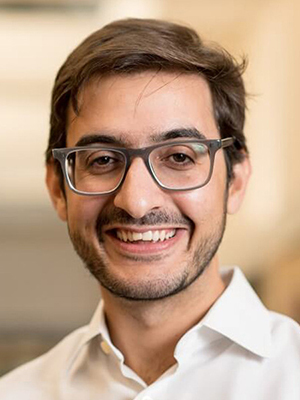
<figure class="image image-right"><img src="https://al.nd.edu/assets/680100/fullsize/luis_schiumerini_headshot.jpg" alt="A smiling man with dark hair and glasses, wearing a white collared shirt." width="300" height="400">
<figcaption>Luis Schiumerini</figcaption>
</figure>
<p>“The award is named for one of my heroes,” Schiumerini said. “When I teach what democracy means at Notre Dame, I assign Robert Dahl’s classic <em>Polyarchy</em>, so I’m very honored.”</p>
<p>Comparing electoral trends in Brazil, Chile, and Schiumerini’s home country of Argentina, <em>Incumbency Bias</em> examines how holding office impacts a politician’s chances of getting reelected.</p>
<p>“Above all else, regardless of whether you’re ideologically a good fit or competent or honest, just holding office itself changes your electoral fortunes,” Schiumerini said.</p>
<p>But whether incumbency is a positive or negative bias varies across countries and offices. In the United States and Argentina, incumbency is usually an advantage, but in Brazil, incumbents are less likely to be reelected. And according to Schiumerini’s research, this isn’t random.</p>
<p>“My book says this is actually the natural result of democratic elections working pretty much as we expect them to work,” Schiumerini said.</p>
<p>When voters cast their ballots, they assess the work of their leaders and representatives. Did they deliver public goods? Did they generate economic growth? Did they reduce unemployment? When the answers to these questions guide the polls, voters hold politicians accountable for their actions based on their performance, Schiumerini said.</p>
<p>But sometimes, politicians are held accountable for things they can’t really control. For example, Brazilian mayors have many responsibilities, including health, education, and transportation — a high policy scope. But because of how money is distributed in the Brazilian government, Schiumerini said, mayors often don’t have the resources to carry out their responsibilities — low incumbent capacity.</p>
<p>On the other hand, Argentinian mayors have many more resources and the discretion to use them. Also, unlike Brazilian mayors, they can incur as much debt as they deem necessary to carry out their duties. This higher incumbent capacity gives them a significant incumbency advantage.</p>
<p>“The mismatch between incumbent capacity and policy scope is what shapes the degree to which incumbents meet expectations across the world,” Schiumerini said.</p>
<p><em>Incumbency Bias</em> contends that differences in incumbency bias result from differences in the alignment between citizen expectations and incumbency capacity . It’s the first book written on the subject at all, let alone in Latin America, and uses cutting-edge techniques to pin down causal effects.</p>
<blockquote class="pull" style="float: left; border-left: none; border-right: 0.2em solid var(--brand-gold); margin-left: 0px; padding: 1em 1.5em 1em 0;">
<p>“Building knowledge on politics can also inform citizens across the most important industries in society — economics, religion, education, culture. That’s why the research of political scientists matters.”</p>
</blockquote>
<p>The book also comes at a time when incumbency is top of mind for political scientists, as the world has recently experienced and an anti-incumbency wave in national elections. Until Argentina’s last two presidential elections, no sitting president had ever failed to be reelected in the country. While <em>Incumbency Bias</em> focuses on subnational rather than presidential elections, the book’s theory could aid future research on the recent “incumbency curse” in national politics, Schiumerini said.</p>
<p>But what really makes the book special is how it puts a niche issue into the broader context of democracy’s global health.</p>
<p>“The book is ultimately asking, ‘Is this good for democracy?’” Schiumerini said. “It encourages scholars to think more about the institutional design of democracy, particularly how responsibilities are allocated across offices in relation to the capacity of those offices.”</p>
<p><em>Incumbency Bias</em> reveals that even if elections are free and fair — no tally meddling, no voter intimidation, no media control — the results can be biased simply because of institutional discrepancies between politicians’ responsibilities and capabilities. And because democracy affects everyone, it’s something everyone should be learning and talking about, Schiumerini said.</p>
<p>“Building knowledge on politics can also inform citizens across the most important industries in society — economics, religion, education, culture,” he said. “That’s why the research of political scientists matters.”</p>]]>
    </content>
    <link rel="enclosure" type="image/jpeg" href="https://al.nd.edu/assets/680101/20240911_jlh_poly_sci_luis_schiumerini_class_006.jpg" title="Professor with glasses in a grey jacket gestures while lecturing in a classroom."/>
    <author>
      <name>Adah McMillan</name>
    </author>
  </entry>
  <entry>
    <id>tag:al.nd.edu,2005:News/185921</id>
    <published>2026-09-30T17:00:00-04:00</published>
    <updated>2026-10-01T11:40:37-04:00</updated>
    <link rel="alternate" type="text/html" href="https://al.nd.edu/news/latest-news/justice-brett-kavanaugh-and-other-distinguished-guests-remember-9-11-at-2026-jeanie-poole-oshaughnessy-memorial-lecture/"/>
    <title>Justice Brett Kavanaugh and other distinguished guests remember 9/11 at 2026 Jeanie Poole O’Shaughnessy Memorial Lecture</title>
    <summary type="text">
      <![CDATA[Seniors Angela Moreno  and Will Carlson  open the "25 Years After 9/11" conversation.…]]>
    </summary>
    <content type="html">
      <![CDATA[<figure class="image image-right"><img src="https://constudies.nd.edu/assets/679558/ncs_jpos_20260911_60369.jpg" alt="Will Carlson and Angela Moreno speak at the podium." width="600" height="451">
<figcaption><em>Seniors Angela Moreno  and Will Carlson  open the "25 Years After 9/11" conversation.</em></figcaption>
</figure>
<p>A quarter century after the terrorist attacks of September 11, 2001, a panel of distinguished guests related their harrowing firsthand experiences of the tragic day and its aftermath at the University of Notre Dame's <a href="https://constudies.nd.edu/">Center for Citizenship &amp; Constitutional Government</a>'s 2026 <a href="https://constudies.nd.edu/events/jpos-lecture/">Jeanie Poole O’Shaughnessy Memorial Lecture.</a></p>
<p>The panel consisted of U.S. Supreme Court Associate Justice Brett Kavanaugh; Notre Dame president emeritus Rev. Edward A. “Monk” Malloy, C.S.C.; former March for Life president Jennie Bradley Lichter '04; and Piper Sandler vice chairman and senior managing principal James J. “Jimmy” Dunne.</p>
<p>Notre Dame President Rev. Robert Dowd, C.S.C., opened the program by recalling his own experience as a graduate teaching assistant and leading a prayer of remembrance. Tocqueville Fellow and senior Will Carlson then led the pledge of allegiance, and Tocqueville Fellow, CCCG intern, and senior Angela Moreno introduced the members of the panel.</p>
<p>CCCG founder and director Professor Vincent Phillip Muñoz facilitated the conversation, and panelists ensured that the audience in the DeBartolo Performing Arts Center would not forget the sobering day.</p>
<p>The speakers’ proximity to September 11’s events ranged from New York City, to the White House, to Notre Dame’s campus, and offered a breadth of insights. </p>
<p>"It was very thought-provoking to hear the stories of the day from a former Notre Dame student all the way up to a Supreme Court Justice,” said Joe Manning , a sophomore majoring in history, who attended the lecture. “The panel’s cumulative experiences demonstrated the intertwined stories of 9/11 and the University of Notre Dame."</p>
<p>On Sept. 11, Jimmy Dunne '78 (who currently serves on the University’s Board of Trustees) was a senior managing principal at Sandler O’Neill + Partners located in the South Tower at the time. Dunne was out of the office on that morning, playing golf, when he heard the news.</p>
<p>“I buckled, and I hit the ground,” Dunne said emotionally.</p>
<p>At the time of the attacks, the now-Justice Kavanaugh worked in the White House as an associate counsel to the U.S. President. He described how “Secret Service came down to the basement and said ‘You gotta run, you gotta sprint.’” When asked where the staff was supposed to evacuate, the Justice responded, “We didn’t have anywhere to go.” His narrative underscored the chaos and fear experienced in Washington that day.</p>
<figure class="image image-left"><img src="https://constudies.nd.edu/assets/679559/20260911_ncs_jposquickedit_5.webp" alt="Jennie Bradley Lichter '04 speaking at the DeBartolo Performing Arts Center." width="600" height="800">
<figcaption><em>Jennie Bradley Lichter '04 speaking at the DeBartolo Performing Arts Center.</em></figcaption>
</figure>
<p>Jennie Bradley Lichter was an undergraduate student at the time and experienced the events from her dorm room in Lyons Hall.</p>
<p>“It didn’t make any sense,” she said. "(We) spent the rest of the morning watching TV and being together, which was all we really could do.”</p>
<p>As president of the University, Fr. Malloy had to react with composure to prevent panic and ensure the safety of students and staff. He recalled telling staff that  the “first thing we’re gonna do is worry about the students and their families.”</p>
<p>He canceled classes for the rest of the day and quickly organized a Mass to be held on South Quad.</p>
<p>“We walked out, and it was utter silence,” Malloy said. </p>
<p>In his homily, he invoked Matthew 11:28: “Come to me, all who labor and are heavy laden, and I will give you rest.”</p>
<p>Rather than holding hands for the Our Father, the congregants locked arms, a testament to the supportive nature of the campus community in an uncertain time.</p>
<p>Each panelist emphasized how inconceivable September 11 truly was, helping the undergraduates in the audience, born after 2001, better appreciate the significance of the event.</p>
<p>Lichter’s framing of the shocking events around familiar campus experiences allowed her to serve as a “way-back time machine for the students in the audience.” Conveying the stunning nature of the day, Justice Kavanaugh recalled thinking at the time “this doesn’t happen in America.” Dunne, directly addressing the students, explained that while “terrorism is now in our psyche, it was not then.” The events permanently altered Americans’ frame of mind.</p>
<p>"One thing that Jimmy [Dunne] did really well was help us have the same feeling, and understand deep down what it felt like to be an observer [of 9/11],” said senior Thomas Mitchell.</p>
<p>While the panelists shared their grief and sorrow, they also offered optimistic insights. Justice Kavanaugh's message for students was that “we have much more in common as Americans” than today's divisions suggest. </p>
<figure class="image image-right"><img src="https://constudies.nd.edu/assets/680173/ncs_jpos_20260911_60058.jpg" alt="Archival photographs and newspaper clippings on display during the 2026 Jeanie Poole O’Shaughnessy Memorial Lecture." width="600" height="450">
<figcaption><em>Archival photographs and newspaper clippings on display during the 2026 Jeanie Poole O’Shaughnessy Memorial Lecture.</em></figcaption>
</figure>
<p>Dunne emphasized that even the most accomplished people cannot be isolated from adversity. “These are the greatest minds that we have,” he said, referring to his fellow panelists. “The thing I would want young people to understand is that you’re going to have serious and significant challenges. Bad things are going to happen, so you want to get yourself where you're preparing early for that.”</p>
<p>Dunne’s counsel of preparation for adversity resonated with students. Tocqueville Fellow and junior Jack Rankin said that the stories made it “the most inspiring panel I’ve been to at Notre Dame.”</p>
<p><em>The full event recording can be viewed <a href="https://www.youtube.com/watch?v=Zh_NDHuxqZI&amp;t=3s">on our YouTube channel</a>. To stay in touch with the Center for Citizenship &amp; Constitutional Government and be the first to know about upcoming events, <a href="https://signup.e2ma.net/signup/1974128/1956098/">subscribe to our mailing list here</a>.</em></p>
<p><em>The Jeanie Poole O’Shaughnessy Memorial Lecture was established in 2022 after the death of the Center’s beloved friend and supporter in 2021 and made possible by Patrick O’Shaughnessy and the O’Shaughnessy Family.</em></p>
<p><em>This endowed lecture is designed to connect scholarship and education concerning the ideas and institutions of constitutional government with the principles put into practice by the individuals shaping the civic fabric of our country.</em></p>
<p class="attribution">Originally published by <span class="rel-author">Jack Knorr</span> at <span class="rel-source"><a href="https://constudies.nd.edu/news/justice-brett-kavanaugh-and-other-distinguished-guests-remember-9-11-at-2026-jeanie-poole-oshaughnessy-memorial-lecture/">constudies.nd.edu</a></span> on <span class="rel-pubdate">September 30, 2026</span>.</p>]]>
    </content>
    <link rel="enclosure" type="image/webp" href="https://al.nd.edu/assets/681044/20260911_ncs_jposquickedit_9.webp" title="9/11 Panel Featured Image"/>
    <author>
      <name>Jack Knorr</name>
    </author>
  </entry>
  <entry>
    <id>tag:al.nd.edu,2005:News/185850</id>
    <published>2026-09-30T12:00:00-04:00</published>
    <updated>2026-09-29T17:25:12-04:00</updated>
    <link rel="alternate" type="text/html" href="https://al.nd.edu/news/latest-news/office-hours-joseph-rosenberg-on-great-books-jazz-and-tea-cozies/"/>
    <title>Office Hours: Joseph Rosenberg on great books, jazz, and tea cozies</title>
    <summary type="text">
      <![CDATA[Program of Liberal Studies associate professor Joseph Rosenberg…]]>
    </summary>
    <content type="html">
      <![CDATA[<figure class="image image-default"><img src="https://al.nd.edu/assets/680487/1200x/20260617_jlh_pls_joseph_rosenberg_029_1200x.jpg" alt="Man with glasses in striped shirt and jeans smiles with arms crossed by bookshelves." width="600" height="450">
<figcaption>Program of Liberal Studies associate professor Joseph Rosenberg stands in front of his office space on the third floor of O'Shaughnessy Hall. (Photo by Jon L. Hendricks/University of Notre Dame)</figcaption>
</figure>
<p>The Program of Liberal Studies is known as the University of Notre Dame’s great books major. And <a href="https://pls.nd.edu/people/joseph-rosenberg/">Joseph Rosenberg</a> has never taken the time to count just how many books line the wall of his O’Shaughnessy Hall office.</p>
<p>“I think the answer is between just enough and too much,” he said. “There’s a saying, ‘How many books do you need? Just one more.’”</p>
<p>This feature is part of a College of Arts &amp; Letters story series called “Office Hours,” which provides a glimpse into the personal and professional lives of Arts &amp; Letters faculty through their workspaces around campus. This installment highlights Rosenberg, an associate professor in the <a href="https://pls.nd.edu/">Program of Liberal Studies (PLS)</a> and a literary critic interested in researching and pushing the boundaries of literature.</p>
<p>In this interview, Rosenberg discusses important mementos in his office that inspire him, are relevant to his work, and remind him of the relationships he’s developed with students.</p>
<p>Rosenberg’s answers have been edited for clarity and conciseness.</p>
<figure class="image image-default"><img src="https://al.nd.edu/assets/680554/1200x/20260617_jlh_pls_joseph_rosenberg_002_1200x2.jpg" alt='Two books by J.H. Prynne are laid on a table, one titled "Kazoo Dreamboats."' width="600" height="450">
<figcaption>PLS associate professor Joseph Rosenberg collects contemporary poetry pieces that open up into a secret world. (Photo by Jon L. Hendricks/University of Notre Dame)</figcaption>
</figure>
<h2><strong>Q: Your office wall is full of so many books, ranging in size and color. Where do you go to find the next great book?</strong></h2>
<p>A: I try to get them from independent bookstores, but it’s so hard these days. While I try to get them secondhand, I’m very interested in contemporary poetry, which can be a lot harder to find because it’s mostly put out by very tiny presses. Some of these are quite boutique and letterpress, but some are even produced on someone’s photocopier.</p>
<p>I find these mostly through word of mouth or through reviews in journals or even blogs. But even then, I’ll often discover that a poet I’m interested in produced a volume three years ago that I never ever heard of. I like keeping a few pamphlets out for students to see. The titles alone – like “Kazoo Dreamboats,” say, or “Wild Ascending Lisp” – seem like tickets to a secret world.</p>
<h2><strong>Q: What are some pieces that continuously inspire you? </strong></h2>
<figure class="image image-left"><img src="https://al.nd.edu/assets/680465/600x/20260617_jlh_pls_joseph_rosenberg_024_1200x.jpg" alt="Man wearing a striped shirt plays a black electric guitar in front of a bookshelf." width="600" height="400">
<figcaption>An amateur jazz player, PLS associate professor Joseph Rosenberg will play some chords whenever he needs a break from writing. (Photo by Jon L. Hendricks/University of Notre Dame)</figcaption>
</figure>
<p>A: I keep a picture on my desk that belonged to my dad, by the artist Stan Washburn. It’s from his “Moral Alphabet of Vice and Folly.” It depicts a philosopher holding a skull, seemingly in deep contemplation. The caption reads, “A philosopher concluded that man’s pretensions are absurd, and that worldly endeavor is without purpose. So assiduous were his ruminations on this insight that he neglected to publish, and in due course, he perished. Moral: publish.”</p>
<p>I keep it on my desk as a reminder to keep writing, but also to not take it so seriously.</p>
<p>I also have a poster of Henry James in tribute to my mother, who is also a literary scholar and has spent her career working on James.</p>
<p>My earliest work was on James, but I’m now more focused on later literary developments. In my scholarship, I’m interested in extremes of language and representation. Some of the books I work on push language as far as one can with it still being — or at least vaguely resembling — literature.</p>
<p>I also keep a guitar in my office. I’m an amateur jazz musician — a passion I shared with my dad — and I play to decompress. But music can also act as a writing tool. If I’m stuck on a really thorny paragraph and need to think it through, it can be nice to pick a guitar up and do something that uses an entirely different part of my brain, and then get back to my work refreshed.</p>
<h2><strong>Q: Having previously served as the PLS director of undergraduate studies (DUS), how would you explain the program to someone who doesn’t know anything about it? </strong></h2>
<p>A: I think the program, once students hear about it, more or less sells itself.</p>
<p>But when students initially just see those initials, “PLS,” they wonder, “Is it poli sci? Is it philosophy?” Well, yes, it is, but also so much more.</p>
<p>The hardest part of being DUS, but also the most pleasurable, was simply explaining to students what it is that we do. In PLS, we study works spanning from ancient Greece to this century, and across a variety of disciplines – literature, philosophy, theology, science, and music. Our classes are small and discussion-based, and the sheer wealth of material students read allows them to see and understand the world from the widest range of perspectives. And seeing the similar range of students we get in the program has been a great pleasure.</p>
<p>There’s something in PLS for everyone, but I think our greatest strength is that we have students read works that they might not otherwise encounter, indeed that they might initially think might not interest them, whether that’s a work of ancient philosophy or contemporary poetry. PLS asks students to be curious about everything.</p>
<p>When I was DUS, I would often tell interested students, “Well, you know that Arts &amp; Letters slogan, ‘Study everything. Do anything.’? We’re the department that actually does that.”</p>
<figure class="image image-right" style="padding: 0; width: 450px; margin-left: 1em;"><img src="https://al.nd.edu/assets/680468/20260617_jlh_pls_joseph_rosenberg_009_600x.jpg" alt="Collage with Dalis urinal, pipe, books, and a game box connected by red string and pins." width="450" height="300"> <img src="https://al.nd.edu/assets/680460/20260617_jlh_pls_joseph_rosenberg_007_600x.jpg" alt="Teapot with knitted cozy featuring a goose and French text." width="450" height="300"> <img src="https://al.nd.edu/assets/680458/20260617_jlh_pls_joseph_rosenberg_010_600x.jpg"' alt="Framed blue portrait of a man with dark hair and intense eyes sits next to books." width="450" height="300">
<figcaption style="display: block;">Rosenberg challenges students to be creative and they've made pieces such as a modernism conspiracy board (top), a tea cozy (middle), and a Picasso-blue-period-esque portrait of author Samuel Beckett (below). (Photos by Jon L. Hendricks/University of Notre Dame)</figcaption>
</figure>
<h2><strong>Q: What are some tokens you have from your students? </strong></h2>
<p>A: One of my students made this amazing modernism conspiracy board, which takes various avant-garde art movements — surrealism, dadaism, vorticism — and tries to connect them. But the attempt to make sense of them all ends up just looking like a paranoid delusion.</p>
<p>Another piece, also a student’s final project from a class I teach on modernism, is this deceptively chintzy tea cozy. It has a swan on it in tribute to the French poet Charles Baudelaire. It reads in French, “I’m catching the taxi to death.” The student’s explanation was that he wanted the tea cozy to be an example of how even the most transgressive art will eventually be transformed into consumer culture.</p>
<p>A year or two ago, I offered a directed reading on the works of Samuel Beckett, and my student painted this very Picasso-blue-period-esque portrait of Beckett. While I, of course, still ask students to write essays, I want to give them an opportunity to do something more creative.</p>
<h2>
<strong>Q: Your first book, </strong><strong><em>Wastepaper Modernism: Twentieth-Century Fiction and the Ruins of Print</em></strong><strong> (Oxford University Press, 2021), examines how famous modernist writers responded to new media, which at that time was cinema. How do you apply that to today’s world with the evolution of artificial intelligence and its influence on writing?</strong>
</h2>
<p>A: Looking back 120 years ago, when things like the cinema and the radio were the new kids on the block, writers got extremely anxious. But, as I argue in <em>Wastepaper Modernism</em>, out of this anxiety came a new kind of literature. So with AI, it’s tricky, right? Because part of me wants to say, “Well, we’ve been through this before, and literature has been just fine.” But at the same time, AI — and large language models, in particular — work in literature’s own medium of language, which perhaps makes it more of a threat to writing.</p>
<p>I take heart, though, that one of the things that AI can’t do well, yet, is write poetry. The literature that it produces tends to be very predictable, moralistic, and just really, really dull. The sorts of things that I value in literature — formal experimentation, newness, novelty — are the very things that AI can’t do. AI draws on and reproduces everything that’s already been done, but it cannot, as of yet, produce anything truly different or original.</p>
<p>Anecdotally, I’ve noticed my students gravitating more towards older media. Some of my students even want to handwrite their papers. Maybe they think of handwriting as the ultimate proof that they didn’t use AI to write their paper, or maybe they just want to make something with their hands. In any case, I think it shows that the matter of writing still matters.</p>
<h2><strong>Q: What do you hope people feel when they come into your office?</strong></h2>
<figure class="image image-left"><img src="https://al.nd.edu/assets/680492/600x/20260617_jlh_pls_joseph_rosenberg_005_1200x.jpg" alt="Man in striped shirt laughs with hand on chest, Notre Dame London poster visible." width="600" height="450">
<figcaption>Rosenberg wants students, and himself, to feel at ease in his office. (Photo by Jon L. Hendricks/University of Notre Dame)</figcaption>
</figure>
<p>A: I want it to feel welcoming. With all the books, it would seem to have a weight of seriousness that I hope is somewhat lightened by tea cozies and modernism conspiracy boards.</p>
<p>I want an office space that puts students at ease, and that puts me at ease as well. Sometimes my classes can be back-to-back. But even with 10-15 minutes in between, I can come in here, close the door, take a breath, have a coffee, and then go back to the classroom refreshed.</p>
<p>The espresso machine is probably the one thing students will never get to use. I did once have a student very cheekily ask during office hours, “Hey, can you make me a coffee?” My answer was, “There’s a Starbucks over in LaFortune.” Hospitality has to have its limits!</p>]]>
    </content>
    <link rel="enclosure" type="image/jpeg" href="https://al.nd.edu/assets/680487/20260617_jlh_pls_joseph_rosenberg_029_1200x.jpg" title="Man with glasses in striped shirt and jeans smiles with arms crossed by bookshelves."/>
    <author>
      <name>Mary Kinney</name>
    </author>
  </entry>
  <entry>
    <id>tag:al.nd.edu,2005:News/185856</id>
    <published>2026-09-30T08:00:00-04:00</published>
    <updated>2026-09-30T09:35:56-04:00</updated>
    <link rel="alternate" type="text/html" href="https://al.nd.edu/news/latest-news/college-of-arts-letters-appoints-luca-grillo-to-first-of-its-kind-global-humanities-professorship-at-notre-dame-rome/"/>
    <title>College of Arts &amp; Letters appoints Luca Grillo to first-of-its-kind global humanities professorship at Notre Dame Rome</title>
    <summary type="text">
      <![CDATA[Luca Grillo  Luca…]]>
    </summary>
    <content type="html">
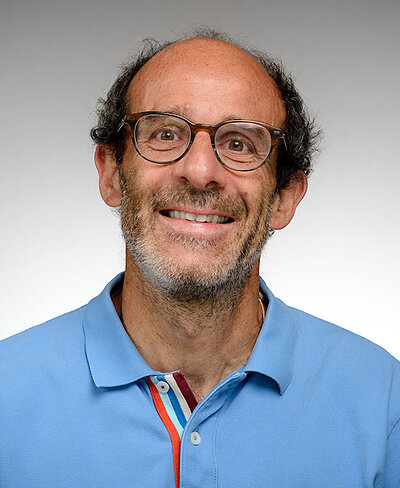
      <![CDATA[<figure class="image image-right"><img src="https://al.nd.edu/assets/680510/400x/luca_grillo.jpg" alt="Man with glasses and beard smiles, wearing a light blue polo shirt with striped collar." width="600" height="732">
<figcaption>Luca Grillo</figcaption>
</figure>
<p><a href="https://classics.nd.edu/people/luca-grillo/">Luca Grillo</a>, professor and chair of the <a href="https://classics.nd.edu/">Department of Classics</a>, has been appointed to a first-of-its-kind position in the <a href="al.nd.edu">College of Arts &amp; Letters</a> — a professorship focused on the global humanities with an appointment connected not to a department, but to one of the University of Notre Dame’s global locations.</p>
<p>As the Rome Global Humanities College Professor, Grillo is charged with deepening the research collaborations between Arts &amp; Letters and Notre Dame Rome and enriching the academic experience for graduate and undergraduate students before, during, and after they study abroad there.</p>
<p>“Serving as the liaison between the College of Arts &amp; Letters and Notre Dame Rome is an exciting mandate to expand our global humanistic engagement,” Grillo said. “By driving new student exchange initiatives and weaving tighter collaborative ties with universities and institutions from Rome and across Italy, we will cultivate an enduring scholarly bridge that enriches both academic communities.”</p>
<p>In his new role, Grillo will spend one out of every six semesters at Notre Dame Rome, teaching one undergraduate course there and advising student research projects and leading collaborative workshops and co-teaching a graduate course with partner institutions in Rome. He will also seek to build relationships with archives, universities, and scholars in Rome that will advance the research of Notre Dame students and faculty, including his own.</p>
<p>During his semesters in South Bend, in addition to his regular teaching, research, and service responsibilities to the Department of Classics, Grillo will serve as a key resource for students preparing to study abroad in Rome. He will advise them on courses to take before their semester there, ensure they have completed the necessary language learning, and help them build the skills and connections necessary to conduct research there. When students return to Notre Dame, Grillo will help them further develop their research into senior thesis projects and advise on additional coursework that will build upon their experiences in Rome.</p>
<figure class="image image-left"><img src="https://al.nd.edu/assets/680511/notre_dmae_rome.jpg" alt="Notre Dame Rome — a pale yellow building, on a street in Rome." width="600" height="338">
<figcaption>Notre Dame Rome</figcaption>
</figure>
<p>“As the world’s leading global Catholic research university, we strive for our students to acquire a global perspective in how they see the world and themselves in the world,” said <a href="https://al.nd.edu/about/people/kenneth-scheve/">Kenneth Scheve</a>, the I.A. O’Shaughnessy Dean of the <a href="https://al.nd.edu/">College of Arts &amp; Letters</a>. “With a leader like Luca strengthening the ties between Notre Dame and Rome, our students will be prepared to transform their time abroad into a defining experience that continues with them long after they come home.”</p>
<p>Grillo came to Notre Dame in 2018 after serving as the William R. Kenan, Jr. Scholar and associate professor at the University of North Carolina at Chapel Hill and as an assistant professor at Amherst College. He holds a doctorate in classics from Princeton University, a master’s degree in classical and Near Eastern studies from the University of Minnesota, and a bachelor’s degree in literature and philosophy from the Università Cattolica del Sacro Cuore in Milan.</p>
<p>A scholar of Latin and Greek language and literature, Roman history, and Augustan poetry, he is the author of books including <em>How to Make Money: An Ancient Guide to Wealth Management</em> (Princeton, 2024) and <em>The Art of Caesar's Bellum Civile </em>(Cambridge, 2012). He also wrote a commentary on Cicero's <em>De Provinciis Consularibus Oratio</em> (Oxford, 2015) and co-edited <em>The Cambridge Companion to the Writings of Julius Caesar</em> (Cambridge, 2017) with Christopher B. Krebs. He is currently working on a book on irony in Latin literature.</p>
<p>“By placing a scholar of Luca’s caliber at the very center of our Rome presence, we’re creating a model for how our faculty and students engage with the world in ever more dynamic and innovative ways,” said <a href="https://global.nd.edu/about/people/michael-pippenger/">Michael Pippenger</a>, Notre Dame’s vice president and associate provost for internationalization. “We’re grateful for the partnership with the College of Arts &amp; Letters in imagining the power and impact of global humanities professorships.”</p>
<p>Grillo’s appointment is the first of this type that Scheve hopes to create, in partnership with Pippenger and <a href="https://global.nd.edu/">Notre Dame Global</a>, with the intent to have additional professorships tied to many of Notre Dame’s 11 other global locations.</p>
<p>“The humanities are the most vital way of understanding the human experience across time and cultures,” Scheve said. “To conduct influential research and shape the trajectories of our students, we must bring the best scholars into dialogue with people and traditions around the world — and a professorship like this makes that possible.”</p>
<p><iframe width="800" height="449" src="https://www.youtube.com/embed/u92W0LqITYw?si=amSqoxWBzMNqnS6s" allowfullscreen="allowfullscreen"></iframe></p>]]>
    </content>
    <link rel="enclosure" type="image/jpeg" href="https://al.nd.edu/assets/680511/notre_dmae_rome.jpg" title="Notre Dame Rome — a pale yellow building, on a street in Rome."/>
    <author>
      <name>Josh Weinhold</name>
    </author>
  </entry>
  <entry>
    <id>tag:al.nd.edu,2005:News/185763</id>
    <published>2026-09-29T12:00:00-04:00</published>
    <updated>2026-10-08T09:12:49-04:00</updated>
    <link rel="alternate" type="text/html" href="https://al.nd.edu/news/latest-news/philosopher-douglas-portmore-is-building-a-comprehensive-worldview-by-questioning-everything/"/>
    <title>Philosopher Douglas Portmore is building a comprehensive worldview by questioning everything</title>
    <summary type="text">
      <![CDATA[Douglas Portmore lectures to his Introduction to Philosophy students.…]]>
    </summary>
    <content type="html">
      <![CDATA[<figure class="image image-default"><img src="https://al.nd.edu/assets/680133/fullsize/20260826_jlh_phil_doug_portmore_class_008.jpg" alt="Man in blue polo shirt speaks into microphone, holding a black remote." width="1200" height="800">
<figcaption>Douglas Portmore lectures to his Introduction to Philosophy students. (Photo by Jon L. Hendrick/University of Notre Dame)</figcaption>
</figure>
<p>Most people have a certain set of standards about what they believe and how to live their lives. But most people don’t bother to write out each one — with citations — on the internet.</p>
<p><a href="https://philosophy.nd.edu/people/faculty/douglas-w-portmore/">Douglas W. Portmore</a> isn’t most people.</p>
<p>On his <a href="https://sites.google.com/site/dwportmore/views">personal website</a>, the University of Notre Dame professor of philosophy details 100-plus philosophical views that he has published in books or journal articles, covering topics from deontology (No. 17) to supererogation noninheritance (No. 72).</p>
<p>“In philosophy, you take your views — about how you ought to live, what to believe, what does and doesn’t exist, whether you have free will, the place of science — and try to make that all coherent,” Portmore said.</p>
<p>Now, he’s compiled many of his views into a book, <a href="https://sites.google.com/site/dwportmore/kantsequentialism-a-morality-of-ends"><em>Kantsequentialism: A Morality of Ends</em></a>, forthcoming with Oxford University Press. In it, he shares his personal worldview, which combines the principles of utilitarianism and consequentialism with the ideas of 18th-century German philosopher Immanuel Kant.</p>
<p>Consequentialism defines the moral value of an action by its consequences, and utilitarianism applies consequentialism by assigning value to actions that maximize happiness. Based on utilitarianism, the ends always justify the means, and a person is only as valuable as they are happy.</p>
<blockquote class="pull">
<p>“It’s very important for all of us to be critical thinkers.”</p>
</blockquote>
<p>Conversely, Kantianism asserts that people are inherently valuable, regardless of the happiness they bring, and therefore should always be respected.</p>
<p>In <em>Kantsequentialism</em>, Portmore seeks to combine the best parts of those often-at-odds philosophies.</p>
<p>“In my view, one thing that matters is respecting people’s decisions,” said Portmore, who came to Notre Dame in 2025 after spending 20 years at Arizona State University and five at California State University, Northridge. “But another thing that matters is how much good there is in the world.”</p>
<p>Looking at the world through Portmore’s view involves more nuance than one sentence can contain — hence the 106-item list and 500-page book. But what he wants from the study of moral philosophy can be put simply: “Tell me how I want the world to go, and then tell me which of my options will make the world go that way.”</p>
<p>Unlike other academic fields, philosophy can’t give Portmore answers through observation or experimentation. Therefore, his research goal is to compile a worldview, and as a professor, to help students find their own worldviews, too.</p>
<p>In addition to the individual research and teaching, Portmore is developing a research program in ethics as a program chair for the <a href="https://ethics.nd.edu/">Institute for Ethics and the Common Good</a>. His work aligns with and enhances the <a href="https://strategicframework.nd.edu/initiatives/ethics-initiative/">Notre Dame Ethics Initiative</a>, which supported his recruitment and appointment last year.</p>
<p>As part of the initiative, Portmore recently convened a two-day workshop that brought together ethical philosophers, including faculty and graduate students, from the University of Michigan and Notre Dame for a weekend of intellectual exchange in Saint Joseph, Michigan. All attendees presented work in progress across a broad range of topics and received feedback from peers.</p>
<p>“Michigan is not only geographically convenient, but both of our schools have an incredible department of ethicists and philosophers,” said <a href="https://philosophy.nd.edu/people/faculty/jessica-isserow/">Jessica Isserow</a>, associate professor of philosophy at Notre Dame and one of the workshop co-planners. “People put a lot of effort into their feedback, making it sharp, but constructive in spirit — and multiple attendees said it was the best feedback they’ve received on their work.”</p>
<p>Portmore is also shaping philosophical conversation globally as editor-in-chief of <em>Ethics: An International Journal of Social, Political, and Legal Philosophy</em>, which has published scholarly work for over a century. He reviews more than 700 papers submitted each year, helping both rising and established philosophers make their mark in the field.</p>
<p>“It’s a way to pay back the community that gave me this wonderful profession,” Portmore said. “My life as a philosopher changed when I got my first publication in the journal that I now edit.”</p>
<h2>Complete understanding</h2>
<figure class="image image-left"><img src="https://al.nd.edu/assets/680131/20260304_jlh_philosophy_portraits_029_douglas_portmore.jpg" alt="Man with beard and glasses smiles, wearing a dark suit jacket over a blue shirt, with bookshelves behind him." width="300" height="400">
<figcaption>Douglas Portmore</figcaption>
</figure>
<p>At the beginning of his scholarly career, Portmore traveled to Australia to study under the famous utilitarian Peter Singer at Monash University’s Centre for Human Bioethics.</p>
<p>Singer is known for his belief that an individual’s value is solely dependent on how happy they are — going so far as to claim a happy rabbit’s life is considered more valuable than an unhappy human.</p>
<p>Portmore initially agreed with him, because he was fully aligned with utilitarianism at that time and was determined to bring all other philosophers into the fold. He wanted all to agree that actions and their consequences — and the worlds they create — should be ranked according to the point of view of the universe.</p>
<p>But as Portmore learned from and debated other Monash faculty, it became difficult to convince himself of utilitarianism, let alone other scholars.</p>
<p>“The more I thought about it, I thought, ‘Why should I do that?’” he said. “I have reasons to want some worlds more than others that have nothing to do with the point of view of the universe.”</p>
<p>That realization put Portmore on the path toward developing <em>Kantsequentialism</em>. It wasn’t his first turning point; in fact, when he started his undergraduate studies at the University of California, San Diego, he thought understanding the world would be fulfilled by studying science, not philosophy.</p>
<p>But Portmore realized the field wasn’t for him when he saw how many assumptions scientists take for granted. For example, one philosophical theory called idealism suggests that reality is entirely made up of ideas and thoughts, not anything physical. While Portmore admits he personally thinks idealism is patently false, he argues it’s still a perspective that needs to be considered.</p>
<blockquote class="pull">
<p>“Some people think philosophy doesn’t make any progress because we’re still talking about the same things that Plato and Aristotle talked about thousands of years ago. I make progress when I see students open their eyes and start questioning the assumptions of the previous generation.”</p>
</blockquote>
<p>“Scientists don’t argue that their view is better than idealism; they just assume that idealism is false and move on,” he said. “So if I want to understand the world completely, science is not where it’s at.”</p>
<p>That’s an easier process with support from one of the world's largest philosophy departments. Notre Dame’s continued investment in the humanities, Portmore said, has attracted and developed a strong cohort of other ethical philosophers with whom he can discuss ideas. It’s a place where he has found others like him who seek understanding.</p>
<p>Understanding the world is more than a matter of intellectual curiosity, Portmore said, because society can make grave errors when things go unquestioned. Ideas ranging from geocentrism to enslavement were once widely accepted norms, he said, and philosophy seeks to root out other harmful ideas from modern society.</p>
<p>And that’s why Portmore believes philosophy isn’t just for philosophers.</p>
<p>“It’s very important for all of us to be critical thinkers — ones who don’t just accept something because your parents accepted it or the generation before you accepted it or your culture or your nation accepts it,” he said. “It’s important to learn to question those things.”</p>
<h2>Teaching disagreement</h2>
<p>A large part of Portmore’s role as a philosopher is teaching his students how to question everything, whether they’re first-years completing the <a href="https://advising.nd.edu/first-year-and-incoming-students/requirements-and-credits/core-curriculum/">Core Curriculum</a> or accomplished Ph.D. candidates.</p>
<p>He gets particularly energized when students begin examining all areas of their own lives: Should we be eating meat? Does God exist? Should we be giving to charity? Is science infallible? How do we know we’re not dreaming?</p>
<figure class="image image-left"><img src="https://al.nd.edu/assets/680132/20260826_jlh_phil_doug_portmore_class_014.jpg" alt='Man with beard and glasses lectures beside a podium in front of screen titled "10. The Norms for a Philosophy Class."' width="600" height="400">
<figcaption>Douglas Portmore talks to his students — many of whom are taking a philosophy class for the first time — about how to have philosophical discussions. (Photo by Jon L. Hendricks/University of Notre Dame)</figcaption>
</figure>
<p>“I’m not there to teach them certain facts,” Portmore said. “I’m teaching them a set of skills and trying to elicit some intellectual curiosity in them, a willingness to be open-minded and to critically reflect on what they were brought up to believe.”</p>
<p>That can be difficult in introductory courses full of students with no particular interest in philosophy, and especially with those hesitant to openly disagree with their professors. When Portmore brings up something like idealism, he doesn’t want his students taking notes — he wants them to say, “That’s insane!”</p>
<p>Once students learn that it’s OK to disagree, Portmore said, he can teach them how to disagree properly and express themselves effectively. Those are key skills for every student, no matter their major.</p>
<p>Everyone should spend time thinking about how they should live their life, Portmore said. And that process moves forward every time someone asks a question.</p>
<p>“Some people think philosophy doesn’t make any progress because we’re still talking about the same things that Plato and Aristotle talked about thousands of years ago,” he said. “I make progress when I see students open their eyes and start questioning the assumptions of the previous generation.”</p>]]>
    </content>
    <link rel="enclosure" type="image/jpeg" href="https://al.nd.edu/assets/680133/20260826_jlh_phil_doug_portmore_class_008.jpg" title="Man in blue polo shirt speaks into microphone, holding a black remote."/>
    <author>
      <name>Adah McMillan</name>
    </author>
  </entry>
  <entry>
    <id>tag:al.nd.edu,2005:News/185920</id>
    <published>2026-09-28T11:30:00-04:00</published>
    <updated>2026-10-01T11:27:39-04:00</updated>
    <link rel="alternate" type="text/html" href="https://al.nd.edu/news/latest-news/echoes-of-the-gridiron-notre-dame-archives-brings-football-history-to-lambeau-field/"/>
    <title>Echoes of the Gridiron: Notre Dame Archives brings football history to Lambeau Field</title>
    <summary type="text">
      <![CDATA[Shamrock Series exhibit drew thousands of fans to the Green Bay Packers Hall of Fame, connecting generations through more than a century of Notre Dame and Wisconsin football history.]]>
    </summary>
    <content type="html">
      <![CDATA[<figure class="image image-default"><img src="https://conductorshare.nd.edu/assets/680317/fullsize/09062026_game_day_conductor_10.jpg" alt="A woman in a navy and Notre Dame Marching Band uniform looks at a display of  football artifacts." width="1200" height="675"></figure>
<p>Amid a sea of visitors wearing University of Notre Dame navy blue and Badger red, Mataya Watson stood out in her marching band uniform, marked by the gold monogram and Notre Dame plaid scarf.</p>
<p>Watson had only 30 minutes of free time before reporting for pregame at Lambeau Field with the Band of the Fighting Irish. She knew exactly how to spend it: at the Green Bay Packers Hall of Fame.</p>
<p>Joined by Fighting Irish and Wisconsin fans, Watson took in more than a century of football history thanks to a collaboration between archives at Notre Dame, the University of Wisconsin-Madison, and the Green Bay Packers Hall of Fame. The exhibit, titled "From the Gridiron to the Archives: Documenting Over a Century of Notre Dame and Wisconsin Football," brought together pieces from collections at the three institutions to tell a shared story about two of college football’s most storied programs.</p>
<p>“When I heard about this exhibit, I knew I had to make an appearance,” Watson said. “I think it is always important to share history with the public.”</p>
<div style="text-align: center;"><iframe width="560" height="315" src="https://www.youtube.com/embed/xHXP_NcIhqw?si=3PDmtlFMIvvNjBmY" title="YouTube video player" frameborder="0" allow="accelerometer; autoplay; clipboard-write; encrypted-media; gyroscope; picture-in-picture; web-share" referrerpolicy="strict-origin-when-cross-origin" allowfullscreen="allowfullscreen"></iframe></div>
<p>Browsing the items on display and reading their descriptions, Watson — like many exhibit visitors — held up her phone to photograph some of her favorites, including an array of tickets from past Notre Dame-Wisconsin games.</p>
<p>“It’s such a gift to bring these items out, especially today,” Watson said. “You can watch a football game, and you can learn some of your team’s history.”</p>
<p>Over the course of the five-day exhibit, the Hall of Fame hosted nearly 7,000 visitors. Saturday marked the sixth-best single-day attendance in its history, and Sunday, even with limited hours, ranked as its second-busiest gameday on record.</p>
<p>“I am so thrilled we could share so many important items from our collections with the public at Lambeau Field,” said <a href="https://directory.library.nd.edu/directory/employees/mmeserv1">Margaret Meserve</a>, Edward H. Arnold Dean of the Hesburgh Libraries. “It was terrific to see fans lining up to take in the exhibit, speak with our archivists, and learn more about the history of these major American college football programs. Whenever we share our collections beyond campus, we find a ready audience that’s eager to engage with them. And I’m grateful for the opportunity to mount this exhibit together with colleagues from Wisconsin and the Packers organization. We’ve laid a foundation for more archival collaborations in the future.”</p>
<blockquote class="pull">
<p>“Whenever we share our collections beyond campus, we find a ready audience that’s eager to engage with them. And I’m grateful for the opportunity to mount this exhibit together with colleagues from Wisconsin and the Packers organization. We’ve laid a foundation for more archival collaborations in the future.”</p>
<p><br>— Margaret Meserve, the Edward H. Arnold Dean of Hesburgh Libraries</p>
</blockquote>
<h2 dir="ltr">Notre Dame Archives Brings Collections Beyond Campus</h2>
<figure class="image image-left"><img src="https://conductorshare.nd.edu/assets/680319/400x/09052026_shamrocksaturday_24.jpg" alt="A man and woman examine a Notre Dame football exhibit featuring historical artifacts." width="400" height="287"></figure>
<p>This marks the second Shamrock Series exhibit created by the <a href="https://archives.nd.edu/">University Archives</a>. In 2024, <a href="https://directory.library.nd.edu/directory/employees/gbond2">Greg Bond</a>, sports archivist for the Notre Dame Archives and curator of the <a href="https://rarebooks.library.nd.edu/collections/sports/index.html">Joyce Sports Research Collection</a>, <a href="https://directory.library.nd.edu/directory/employees/pmilhoan">Patrick Milhoan</a>, University archivist, and <a href="https://directory.library.nd.edu/directory/employees/ehogan2">Elizabeth Hogan</a>, senior archivist and associate director of University Archives, traveled to <a href="https://www.library.nd.edu/news/exhibit-takes-history-on-the-road">Yankee Stadium</a> to display pieces from the collection prior to the Shamrock Series game against Army.</p>
<p>For Milhoan, presenting an exhibit at the Shamrock Series provides an opportunity to introduce new audiences to the University Archives.</p>
<p>“Historically, archives have been painted as gatekeepers to collections and knowledge, but nothing could be further from the truth,” Milhoan said. “The collections that we have in the University Archives are not only accessible, but they’re also meant to be used, researched, handled, analyzed, and discovered.”</p>
<p>The primary mission of archives is to engage with students and faculty throughout the year, but access isn’t limited to individuals on campus. Anyone can schedule an appointment to view items on the sixth floor of the Hesburgh Library.</p>
<p>“The most common question I got during the exhibit events was, ‘Where does this stuff live?’ and ‘Can I see it again?’” Bond said. “Whether you’re a tenured professor, an alum, or a fan, if you want to learn from our material, you are welcome.”</p>
<h2 dir="ltr">Connecting fans with Notre Dame Football History</h2>
<blockquote class="pull">
<p>“I think one of the things that I will take away from this experience is just how great it was to see people enjoying our exhibit and interacting with the fans and alumni who connected to it. There were people looking at the photographs, and I remember somebody was saying, ‘My great-grandfather was on that Notre Dame football team in 1963.’”</p>
<p><br>—Mackenzie Ryan, assistant university records officer and compliance specialist at UW-Madison</p>
</blockquote>
<p>Beyond campus, From the Gridiron to the Archives gave fans in Green Bay an opportunity to engage with University Archives collections in one of the most historic sports venues in the United States.</p>
<p>The exhibit didn’t just connect fans with history; it helped spur conversations—such as a mom explaining the concept of listening to a game on the radio after her son asked why people used a Knute Rockne-branded board game and game tracker.</p>
<p>“I think one of the things that I will take away from this experience is just how great it was to see people enjoying our exhibit and interacting with the fans and alumni who connected to it,” Mackenzie Ryan, assistant university records officer and compliance specialist at UW-Madison, said. “There were people looking at the photographs, and I remember somebody was saying, ‘My great-grandfather was on that Notre Dame football team in 1963.’”</p>
<p>Commonplace or one-of-a-kind, objects bring the past into the present.</p>
<p>“Exhibit visitors could see Rockne’s whistle from 10 centimeters away and the name ‘Knute Rockne’ engraved on one side,” Bond said. “Seeing something like that up close makes these histories, stories, and traditions real to people.”</p>
<blockquote>
<div style="text-align: center;"><iframe width="560" height="315" src="https://www.youtube.com/embed/BrHFlqRevZE?si=knG3yBBpIdBbZFdf" title="YouTube video player" frameborder="0" allow="accelerometer; autoplay; clipboard-write; encrypted-media; gyroscope; picture-in-picture; web-share" referrerpolicy="strict-origin-when-cross-origin" allowfullscreen="allowfullscreen"></iframe></div>
</blockquote>
<p>And more than a century ago, Knute Rockne also highlighted the importance of emphasizing a school’s and team’s history and traditions.</p>
<p>In his 1925 book <em>Coaching: The Way of the Winner,</em> Rockne wrote, “A school without traditions will find it very hard to build up a successful football team, as tradition is a powerful factor.”</p>
<p>Notre Dame’s football history, stories, and traditions have been part of Liam Mooney’s life for as long as he can remember. The third-generation Fighting Irish fan, originally from Albany, New York, toured the exhibit with his father, Brian, excitedly talking about items and taking photos.</p>
<p>“I was raised as a Notre Dame fan before I could even walk, and it’s just been incredible to see not only this team come back, but to be here at Lambeau and experience the history,” Mooney said. “We hear about football history all the time, but it’s almost overwhelming to see artifacts from the very early days of the team and think about the context of all of the amazing players and coaches who paved the way for where we are now as a team and a sport.”</p>
<h2 dir="ltr">Preserving today’s memories for the future</h2>
<p>While visitors were spending the weekend making memories, the archivists were already preserving pieces of them for future generations.</p>
<p>“There were brochures from events that were happening at Lambeau Field and around Green Bay in anticipation of the Shamrock Series,” Hogan said. “I picked up a handful of those for us to put into the Archives. It’s those little things that people don’t think about saving.”</p>
<p>For Watson, Mooney, and the thousands of people who visited From the Gridiron to the Archives at the Hall of Fame, the “little things” preserved from seasons past created connections with stories from generations before them while creating memories of their own.</p>
<p>“What surprised me most about the weekend’s events was just the amount of gratitude that we received,” Milhoan said. “It speaks to the efforts of the team from all three organizations and to the broader Notre Dame community’s appetite to engage with its history.”</p>
<div style="text-align: center;"><iframe width="560" height="315" src="https://www.youtube.com/embed/FHt977epwMg?si=HYVsVr2ESvAWA1Kt" title="YouTube video player" frameborder="0" allow="accelerometer; autoplay; clipboard-write; encrypted-media; gyroscope; picture-in-picture; web-share" referrerpolicy="strict-origin-when-cross-origin" allowfullscreen="allowfullscreen"></iframe></div>]]>
    </content>
    <link rel="enclosure" type="image/jpeg" href="https://al.nd.edu/assets/681043/09062026_game_day_conductor_10.jpg" title="A woman in a navy and Notre Dame Marching Band uniform looks at a display of  football artifacts."/>
    <author>
      <name>Becky Malewitz</name>
    </author>
  </entry>
  <entry>
    <id>tag:al.nd.edu,2005:News/185790</id>
    <published>2026-09-28T10:13:00-04:00</published>
    <updated>2026-09-28T10:13:58-04:00</updated>
    <link rel="alternate" type="text/html" href="https://al.nd.edu/news/latest-news/five-early-career-scholars-form-second-arts-letters-cohort-of-prestigious-notre-dame-postdoctoral-fellowship-program/"/>
    <title>Five early-career scholars form second Arts &amp; Letters cohort of prestigious Notre Dame postdoctoral fellowship program</title>
    <summary type="text">
      <![CDATA[Five interdisciplinary scholars have joined the College of Arts &amp; Letters at the University of Notre Dame to continue their research, obtain invaluable support, and engage in professional development as part of the Provost’s…]]>
    </summary>
    <content type="html">
      <![CDATA[<p>Five interdisciplinary scholars have joined the <a href="http://al.nd.edu/">College of Arts &amp; Letters</a> at the University of Notre Dame to continue their research, obtain invaluable support, and engage in professional development as part of the <a href="https://al.nd.edu/research/centers-institutes-and-special-programs/provostpostdocs/">Provost’s Postdoctoral Fellowship Program</a>.</p>
<p>Launched in 2025, the postdoctoral program provides financial, research, and mentorship support for exceptional scholars across an array of fields. The program — which also includes scholars in the <a href="https://sciencepostdocs.nd.edu/">College of Science</a> and <a href="https://engineering.nd.edu/provosts-postdoctoral-fellowships-in-engineering-program/">College of Engineering</a> — developed out of the commitment in <a href="https://strategicframework.nd.edu/notre-dame-2033-a-strategic-framework/">Notre Dame 2033: A Strategic Framework</a> to become the world’s leading Catholic research university, and it is also supported by the <a href="http://provost.nd.edu/">Office of the Provost,</a> the <a href="https://graduateschool.nd.edu/">Graduate School</a>, and the <a href="https://postdocs.nd.edu/">Office of Postdoctoral Affairs</a>.</p>
<p>Led by <a href="https://pls.nd.edu/people/katie-bugyis/">Katie Bugyis</a>, the Rev. John A. O’Brien Associate Professor in the <a href="http://pls.nd.edu/">Program of Liberal Studies</a> and the College’s director of postdoctoral studies, this year’s Arts &amp; Letters cohort will each receive a generous stipend, research support, mentorship, and professional development opportunities. The group will contribute to research and teaching in the Institute of Latino Studies and in the departments of Anthropology, Music, Philosophy, and Political Science for the next two years.</p>
<p>“The five new Provost’s Postdoctoral Fellows are the very best early career scholars in their respective fields,” Bugyis said. “I spent the past spring and summer imagining myriad ways in which they would expand the disciplinary breadth of the program and enrich the lively interdisciplinary exchange among the fellows and committed faculty in participating departments and institutes, and I have been thrilled to see the realization of those hopes at our initial events. I look forward to building on the program’s great strengths in the year ahead.”</p>
<p><a href="https://apply.interfolio.com/190347">Applications for the third cohort</a>, which will be on campus from 2027-29 are now open, and doctoral candidates can apply for positions in the departments of <a href="https://artdept.nd.edu/">Art, Art History, and Design</a>; <a href="https://english.nd.edu/">English</a>; <a href="https://germanandslavic.nd.edu/">German, Slavic, and Eurasian Studies</a>; <a href="https://philosophy.nd.edu/">Philosophy</a>; <a href="https://romancelanguages.nd.edu/">Romance Languages and Literatures</a>; and <a href="https://theology.nd.edu/">Theology</a>, as well as the <a href="https://raceandresilience.nd.edu/">Initiative on Race and Resilience</a>; and the <a href="https://philosophy.nd.edu/graduate-program/history-and-philosophy-of-science/">Program in History and Philosophy of Science</a>. The deadline to apply is Dec. 1.</p>
<figure class="image image-left image-circle"><img src="https://al.nd.edu/assets/669122/300x/aida_arosoaie_headshot.jpg" alt="Woman with brown hair and glasses smiles outside a building." width="300" height="300"></figure>
<h2><strong>Aida Arosoaie — Anthropology</strong></h2>
<p>Environmental anthropologist Aida Arosoaie focuses her research on the social, ecological, and geopolitical entanglements arising from competing practices of resource extraction in Southeast Asia.</p>
<p>Drawing on more than two years of archival and ethnographic research, her doctoral work at the University of Wisconsin-Madison analyzed the historical connections among natural rubber cultivation, tropical forestry management, and synthetic rubber production in Southeast Asia over the last century. With a multi-methodological approach — including oral histories, archival work, ethnography, collaboration, and creative art-making — she investigated the complex dynamics between technoscience, extractive practices, racial capitalism, and postcolonial frameworks of justice.</p>
<p>In the <a href="https://anthropology.nd.edu/">Department of Anthropology</a>, Arosoaie plans to expand her research through two new projects — the first, a monograph, examining how overlapping plantation and ecologies in Malaysia engender new modalities of negotiating power, and the second, a book, conceptualizing climate change as a synthetic affliction at the intersection of different modes of resource extraction, such as monocrop plantations and petrochemical production.</p>
<p>In addition to a Provost’s Postdoctoral Fellowship with Arts &amp; Letters, Arosoaie will also be a concurrent fellow with the <a href="https://strategicframework.nd.edu/initiatives/sustainability/">Just Transformations to Sustainability Initiative.</a> There, she will examine the shifting notions of sustainability that have emerged from the management of tropical forestry over the past decades.</p>
<p>She will be mentored by <a href="https://anthropology.nd.edu/people/catherine-bolten/">Catherine Bolten</a>, professor of anthropology and peace studies, and plans to work closely with assistant professor <a href="https://anthropology.nd.edu/people/luis-felipe-rosado-murillo/">Luis Felipe Rosado Murillo</a>; <a href="https://anthropology.nd.edu/people/rahul-oka/">Rahul Oka</a>, research associate professor, and <a href="https://anthropology.nd.edu/people/mark-golitko/">Mark Golitko</a>, associate professor. She will also engage with <a href="https://history.nd.edu/">Department of History </a>faculty such as associate professors <a href="https://history.nd.edu/people/paul-ocobock/">Paul Ocobock</a> and <a href="https://history.nd.edu/people/joshua-specht/">Joshua Specht.</a></p>
<p>“I am very grateful for the opportunity to join the thriving intellectual community at the University of Notre Dame,” she said. “By supporting my postdoctoral journey, the College of Arts &amp; Letters will enable me to simultaneously strengthen my research agenda and advance its intellectual goals,” she said.</p>
<figure class="image image-left image-circle"><img src="https://al.nd.edu/assets/669124/300x/yu_hao_chen_headshot.jpg" alt="A man with dark hair, a goatee, and clear glasses wears a black jacket." width="300" height="300"></figure>
<h2><strong>YuHao Chen — Music</strong></h2>
<p>YuHao Chen is a sound studies scholar whose research traces the interplay between sound-writing technology and embodiment in East Asia during the late 19th and early 20th centuries. He received his Ph.D. in music, with graduate certificates in Asian studies and cultural studies, from the University of Pittsburgh and, most recently, was a postdoctoral fellow in the Global Arts + Humanities Society of Fellows at The Ohio State University.</p>
<p>In the <a href="https://music.nd.edu/">Department of Music</a>, Chen plans to extend his doctoral research into various publications. His first book, tentatively titled “Phonographic Conversion,” aims to expand traditional views of sound recording by looking at phonetic reading systems as musical records in the context of early Chinese disability education. His second work, tentatively titled “Archives for the Unsound,” considers the role of silence in 19th-century Western perceptions of China.</p>
<p>“Taken together, my research addresses the overarching question of what it means to be human in the machine age during the late 19th and early 20th centuries,” he said.</p>
<p>A trained musician, Chen will work with mentor <a href="https://music.nd.edu/people/faculty/berthold-hoeckner/">Berthold Hoeckner</a>, the Keough-Hesburgh Professor of Music History, and he plans to engage with the <a href="https://strategicframework.nd.edu/initiatives/arts/">Arts</a> Initiative and the <a href="https://ftt.nd.edu/news-events/events/research-workshops/">Visual Cultures Workshop Series</a>.</p>
<p>“I am eager to initiate conversations around art-based methods for the humanities,” he said.</p>
<figure class="image image-left image-circle"><img src="https://al.nd.edu/assets/669125/300x/mattlyn_cordova_headshot.jpg" alt="Woman with dark hair smiles, wearing a navy blazer over a white patterned shirt." width="300" height="300"></figure>
<h2>
<strong>Mattlyn Cordova — </strong><strong>Institute for Latino Studies </strong>
</h2>
<p>Mattlyn Cordova is an American studies scholar with a focus on film and digital studies, Latinx visual culture, affect theory, and brownness. Her research examines the role of digital technology in society’s understanding of racial and ethnic formations in the United States.</p>
<p>A Harvard University graduate, Cordova plans to expand on her dissertation, “Brown Belongings: Intimacy and Community Making in Twenty-First Century Latinx Digital Media,” into her first book manuscript. The book will explore the relationship between the formation of Latinidad and digital spectatorship and consider how digital distribution has enabled new forms of viewing and new modes of spectatorship that facilitate the creation of communities among dispersed spectators.</p>
<p>“Drawing from Latinx performance studies scholarship, I argue that recent technological and media shifts invite new forms of intimacies and identities, ones that illuminate a vibrant understanding of Latinx spectatorship and community,” said Cordova, who will join the <a href="https://latinostudies.nd.edu/">Institute for Latino Studies (ILS)</a>. “This project will consider the use of virtual reality, specifically as a medium that asks viewers to become part of the image.”</p>
<p>Cordova will be mentored by ILS director <a href="https://latinostudies.nd.edu/people/personnel/jason-ruiz/">Jason Ruiz</a>, professor of American studies, and work closely with <a href="https://ftt.nd.edu/people/anne-garcia-romero/">Anne García-Romero</a>, professor of theatre and chair of the <a href="https://ftt.nd.edu/">Department of Film, Television, and Theatre</a>.</p>
<p>“This program appeals to me not only because of Notre Dame’s investment in the arts and humanities, as evidenced by the University-wide <a href="https://strategicframework.nd.edu/initiatives/arts/">Arts Initiative</a>,” Cordova said, “but also because of the vibrant community the Institute for Latino Studies offers.”</p>
<figure class="image image-left image-circle"><img src="https://al.nd.edu/assets/669126/300x/stephen_mackereth_headshot.jpg" alt="Man wearing glasses and a dark sweater over a patterned shirt smiles in front of a tan building." width="300" height="300"></figure>
<h2><strong>Stephen Mackereth — Philosophy</strong></h2>
<p>Previously a member of the Dartmouth Society of Fellows, Stephen Mackereth studies logic, philosophy of mathematics, and the history of analytic philosophy. He specifically researches the epistemological and conceptual structure of mathematics using the methods of mathematical logic.</p>
<p>“What is particularly delightful about this approach to the philosophy of mathematics is that it becomes possible to prove mathematical theorems that have significance for our philosophical understanding of mathematics as a whole,” Mackereth said. “These theorems belong to the tradition of metamathematics, or mathematics reflecting upon itself.”</p>
<p>Mackereth’s research interests stem from an effort to understand the great foundational debate in 20th-century mathematics between logicists and constructivists, as well as the effects of this debate on the subsequent development of analytic philosophy. He enjoys thinking about logical and semantic paradoxes; about the concepts of proof, truth, computation, and definition; and about the nature and significance of foundations in mathematics.</p>
<p>In the <a href="https://philosophy.nd.edu/">Department of Philosophy</a>, Mackereth will be mentored by <a href="https://philosophy.nd.edu/people/faculty/joel-david-hamkins/">Joel David Hamkins</a>, the John Cardinal O'Hara Professor of Logic. He plans to expand on topics he has written about, such as neo-Fregean logicism and Kurt Gödel’s Dialectica translation.</p>
<figure class="image image-left image-circle"><img src="https://al.nd.edu/assets/677803/300x/oliver_silverman_headshot.jpg" alt="A person with short, dark hair, brown eyes, and a slight mustache smiles gently." width="300" height="300"></figure>
<h2><strong>Oliver Silverman — Political Science</strong></h2>
<p>Political theorist Oliver Silverman aims to illuminate how classical political ideas emerged in explicit opposition to insurgent social-struggle practices. Silverman’s current project, “Profane Heaven: Apocalypse from Below and the Invention of Utopia,” offers a novel theory of utopia as both a political concept and a genre.</p>
<p>While utopian literature is commonly associated with egalitarianism and the imagination of communitarian alternatives, Silverman argues that the first English utopian works — by Thomas More, Francis Bacon, and James Harrington — were elite reactions to popular rebellions. Silverman further argues that the idea of utopia appeared as a secular version of heaven, an always-elsewhere good place, that delegitimized struggles for real equality on Earth.</p>
<p>“Reading classic works of political theory in the context of the popular uprisings that unfolded as they were written, I demonstrate that one of the most classic ideas in the history of political thought, utopia, is a product of both philosophical and political repressions of revolutionary movements,” Silverman said.</p>
<p>Silverman completed a Ph.D. at The Graduate Center, City University of New York (CUNY) and has been published in journals such as <em>Political Theory</em>, <em>History of the Present</em>, <em>Utopian Studies</em>, and <em>Theory &amp; Event</em>. Silverman will work closely with mentor <a href="https://politicalscience.nd.edu/people/mary-keys/">Mary Keys</a>, professor in the <a href="https://politicalscience.nd.edu/">Department of Political Science.</a></p>]]>
    </content>
    <link rel="enclosure" type="image/jpeg" href="https://al.nd.edu/assets/680220/20260922_jlh_provost_postdoctoral_fellows_091_1200x.jpg" title="Five people stand in front of a building, dressed in formal attire."/>
    <author>
      <name>Mary Kinney</name>
    </author>
  </entry>
  <entry>
    <id>tag:al.nd.edu,2005:News/185704</id>
    <published>2026-09-23T11:26:00-04:00</published>
    <updated>2026-09-23T11:37:15-04:00</updated>
    <link rel="alternate" type="text/html" href="https://al.nd.edu/news/latest-news/notre-dame-theologian-john-cavadini-to-receive-2026-ratzinger-prize/"/>
    <title>Notre Dame theologian John Cavadini to receive 2026 Ratzinger Prize</title>
    <summary type="text">
      <![CDATA[John Cavadini, professor of theology (Photo by Matt Cashore/University of Notre Dame)]]>
    </summary>
    <content type="html">
      <![CDATA[<figure class="image image-right"><img src="https://news.nd.edu/assets/542674/john_cavadini_600.jpg" alt="John Cavadini 600" width="600" height="600">
<figcaption>John Cavadini, professor of theology (Photo by Matt Cashore/University of Notre Dame)</figcaption>
</figure>
<p><a href="https://theology.nd.edu/people/john-cavadini/">John Cavadini</a>, professor and director of the doctoral program in the <a href="https://theology.nd.edu/">Department of Theology</a> at the University of Notre Dame, will receive the 2026 Ratzinger Prize in Theology, widely regarded as the most prestigious award in the field.</p>
<p>Pope Leo XIV will present the prize to Cavadini at the Vatican Apostolic Palace on December 19.</p>
<p>Cavadini is the third theologian from Notre Dame to win the Ratzinger Prize, following professors emeriti <a href="https://theology.nd.edu/people/cyril-o-regan/">Cyril O’Regan</a> (who received the award from Pope Francis <a href="https://news.nd.edu/news/notre-dame-theologian-to-receive-2024-ratzinger-prize-from-vatican/">in 2024</a>) and <a href="https://theology.nd.edu/people/brian-daley/">Rev. Brian E. Daley, S.J.</a> (honored by Pope Benedict XVI <a href="https://news.nd.edu/news/rev-brian-daley-s-j-to-receive-nobel-prize-in-theology-from-pope-benedict/">in 2012</a>).</p>
<p>“I am very humbled to receive this award, especially after two truly giants in our field and members of our department have received it,” Cavadini said. “I have sought to live out my vocation as a theologian following the example of Origen of Alexandria, a third-century theologian, who repeatedly declared that he wished to be a <em>vir ecclesiasticus</em>, a man of the Church. At Notre Dame, I have been able to live out my vocation as a man of the Church and, at the same time, as a man of the academy.”</p>
<p>Since 2011, the Ratzinger Prize has been annually awarded to scholars, both Catholic and of other faiths, who have made significant contributions to the study of theology in fields such as philosophy, law, and sociology. In recent years, the scope has also expanded to honor musicians, architects, and sculptors.</p>
<p>In announcing the award, the Vatican recognized Cavadini for his work in patristic theology, with a focus on St. Augustine.</p>
<p>“Cavadini is highly regarded for the rigor of his theological publications, his commitment and zeal in university teaching, his academic expertise, his pastoral passion, and his lifelong service to the Church,” said Roberto Regoli, president of the Joseph Ratzinger-Benedict XVI Vatican Foundation.</p>
<p>In addition to his work on Augustine, Cavadini’s research focuses on early medieval theology and the history of biblical and patristic exegesis. His scholarship includes books such as <em>Visioning Augustine</em> (John Wiley &amp; Sons Ltd.: 2019), more than 50 articles in refereed journals or edited collections, and a forthcoming work titled “Augustine’s On the Trinity: A Companion.”</p>
<p>Cavadini received his bachelor’s degree from Wesleyan University, a master’s degree from Marquette University, and a doctorate from Yale University. He came to Notre Dame in 1990 and has since served in a number of administrative and scholarly positions, including chairing the theology department from 1997 to 2010 and directing the <a href="https://mcgrath.nd.edu/">McGrath Institute for Church Life</a> for 26 years. In 2009, Cavadini was appointed by Pope Benedict XVI to a five-year term on the International Theological Commission, and since 2003, he has been a consultant for the U.S. Conference of Catholic Bishops’ Committee on Doctrine.</p>
<p>In addition to his leadership appointments, he has taught both undergraduate and graduate courses and directed nearly 40 dissertations.</p>
<p>“I would hope that honored with this award are all of my students — past and present and future, graduate and undergraduate — all of my colleagues in the Department of Theology to whom I owe so much, and all of the faculty and staff of the McGrath Institute for Church Life, of whose gifts I have been the beneficiary for the last 26 years,” Cavadini said. “Most of all, perhaps, I hope this award redounds, with gratitude, to the credit of Our Lady, the patroness of our University, under whose protection we have flourished for the last 183 years, and may it be so for the next 183 years.”</p>
<p><em><strong>Contact: </strong>Erin Blasko, director of media engagement, 574-631-4127, <a href="mailto:eblasko@nd.edu">eblasko@nd.edu</a></em></p>
<p class="attribution">Originally published by <span class="rel-author">Adah McMillan</span> at <span class="rel-source"><a href="https://news.nd.edu/news/notre-dame-theologian-john-cavadini-to-receive-2026-ratzinger-prize/">news.nd.edu</a></span> on <span class="rel-pubdate">September 23, 2026</span>.</p>]]>
    </content>
    <link rel="enclosure" type="image/jpeg" href="https://al.nd.edu/assets/679682/john_cavadini_1200.jpg" title="A man with gray hair and glasses smiles, wearing a dark suit, blue shirt, and yellow tie."/>
    <author>
      <name>Adah McMillan</name>
    </author>
  </entry>
  <entry>
    <id>tag:al.nd.edu,2005:News/185663</id>
    <published>2026-09-22T11:30:00-04:00</published>
    <updated>2026-10-08T09:05:57-04:00</updated>
    <link rel="alternate" type="text/html" href="https://al.nd.edu/news/latest-news/with-obama-chesky-voyager-scholarship-notre-dame-junior-hopes-to-help-small-towns-around-the-world/"/>
    <title>With Obama-Chesky Voyager Scholarship, Notre Dame junior hopes to help small towns around the world</title>
    <summary type="text">
      <![CDATA[Brodhead, Kentucky, is a town with a population of just over a thousand. It’s more than an hour from the nearest Target, the nearest private school, and the nearest commercial airport. It used to have one stoplight, but it was recently removed. It’s also home sweet home for University of Notre…]]>
    </summary>
    <content type="html">
      <![CDATA[<p>Brodhead, Kentucky, is a town with a population of just over a thousand. It’s more than an hour from the nearest Target, the nearest private school, and the nearest commercial airport. It used to have one stoplight, but it was recently removed.</p>
<p>It’s also home sweet home for University of Notre Dame junior Ella Bussell.</p>
<figure class="image image-right"><img src="https://al.nd.edu/assets/679354/fullsize/img_0027.jpg" alt="Young woman in blue shirt smiles in front of the Golden Dome." width="300" height="400">
<figcaption>Ella Bussell</figcaption>
</figure>
<p>She grew up attending the elementary school where her mom taught first grade and then the high school where her dad was principal. She went to Mass at her county’s one, very small parish. And she developed a deep love for the surrounding Appalachian Mountains as well as the two restaurants in town, such as the Hog Pen, which was built in a renovated barn.</p>
<p>Bussell loves being from a small town, especially the way the community supports and invests in each other. But she also knows the struggles of living in a place limited by structural isolation.</p>
<p>“It’s basically a fancy term for rurality,” she said. “It just means that because of the way that the world has urbanized — and it’s rapidly urbanizing, especially today — we’re driving talent and infrastructure out of more rural areas.”</p>
<p>Bussell now wants to give back to Brodhead and improve life in small towns around the world by researching structural isolation, now with the support of the <a href="https://www.obama.org/programs/voyager-scholarship/2026-2028/ella-bussell/">Obama-Chesky Voyager Scholarship for Public Service</a>.</p>
<p>Created by Barack and Michelle Obama and Brian Chesky, CEO of Airbnb, <a href="https://www.obama.org/programs/voyager-scholarship/">the Voyager Scholarship</a> gives young leaders two years of financial aid and leadership development to help them launch careers in public service. The highlight of the program is the Summer Voyage, a work-travel experience designed by each Voyager to give them experience in their field.</p>
<p>Bussell will spend her Summer Voyage visiting rural communities in at least three countries in order to observe structural isolation in different contexts, hopefully uncovering strategies for managing resources and overcoming regional challenges.</p>
<p>The experience will be a culmination and continuation of the service and study Bussell has already completed at Notre Dame. In the last two years since venturing away from home, she’s connected with new places, people, and ideas she couldn’t have found otherwise.</p>
<p>“Since I’ve been at Notre Dame, very fitting opportunities have become available to me,” she said. “I get to meet a really diverse network of people and just really enjoy the work I’m doing.”</p>
<h2 dir="ltr">Finding familiarity far away</h2>
<p>When Bussell first came to Notre Dame, she didn’t really know she was from a small town. And she didn’t realize her experience growing up had been so drastically different from that of many of her peers until she went to a different continent.</p>
<p>Through the Kellogg Institute’s <a href="https://kellogg.nd.edu/opportunities/undergraduate-students/pre-experiencing-world-fellowship">Pre-Experiencing the World Fellowship Program</a>, Bussell and seven other Notre Dame undergraduate students traveled to Livingstone, Zambia, for a service-learning experience during summer break after her freshman year. Working with the African Impact Foundation, her group taught local schoolgirls soft skills like leadership and relationship building. They also helped with miscellaneous community service projects, from picking up litter to running a soccer club.</p>
<figure class="image image-left"><img src="https://al.nd.edu/assets/679351/fullsize/img_1806.jpg" alt="Two young women stand under a tree next to a medium-sized whiteboard, teaching a large group of children sitting on a mat on the ground." width="600" height="400">
<figcaption>Ella Bussell (left) and another Notre Dame student teach young girls in Livingstone, Zambia. (Photo provided by Ella Bussell)</figcaption>
</figure>
<p>Bussell said she learned a lot from interacting with the different cultures her students came from, but something really started clicking when she heard some of the inconveniences her companions were complaining about, from the slow Wi-Fi to not being able to buy dry-erase markers at the stores in town.</p>
<p>“I was like, ‘Hold up, wait,’” she said, “because that was also what life was like growing up.”</p>
<p>Bussell realized there had to be something more there — a reason she was noticing similarities between Brodhead and Livingstone, a city in a developing country.</p>
<p>Beyond troubles with internet and school supplies, both communities also face problems with access to education. Many high schoolers in Brodhead struggle to find good opportunities to attend college, especially if they want to leave Kentucky, and the closest medical school to Livingstone is a four-hour bus ride away, Bussell said, leading to high dropout rates.</p>
<p>But some of the issues in Livingstone were entirely new to Bussell, like teaching young girls coming from tribes with separate languages and dialects. Though English is Zambia’s official language, the girls often struggled communicating with each other, let alone their American teachers.</p>
<p>Bussell started asking a question she knew would have various but essential answers: “What does it mean to come from a community where you don’t have every resource at your fingertips?”</p>
<p>Of course, Bussell said, living in a small town isn’t all tribulation; in Brodhead, she doesn’t have to lock her car, and it’s easy for her to depend on her neighbors. Small towns teach community reliance and ingenuity.</p>
<p>“There are really beautiful parts of coming from a place like that, but also places where there’s room for improvement,” Bussell said. “And I don’t think there’s much better of a calling than being able to give back to a community that has given you so much.”</p>
<figure class="image image-default"><img src="https://al.nd.edu/assets/679353/fullsize/e.jpg" alt="Woman in a light blue dress speaks at a podium next to an American flag." width="1200" height="800">
<figcaption>Ella Bussell shares her Notre Dame story with the Cavanaugh Council at the Notre Dame Club of Washington, D.C. Symposium. (Photo provided by Ella Bussell)</figcaption>
</figure>
<h2 dir="ltr">Taking advantage of opportunities</h2>
<p>Bussell’s plans for her Summer Voyage aren’t set in stone, but she would like to conduct research in Australia, Kenya, and Ireland.</p>
<p>Australia, as an island, deals with physical isolation from the rest of the world, and individual Australian communities in the outback are often separated by miles of bush. Bussell wants to observe that scope of isolation that isn’t present in the U.S. and learn from Australia’s successful education system.</p>
<p>In Kenya, Bussell plans to work with the Rural Afrique Institute Foundation to explore community-driven development and agriculture initiatives. As rurality is almost the standard in much of Africa, with infrastructure divides isolating even urban centers, Kenya provides a key context for Bussell’s research. Ireland will give Bussell a European perspective and reveal challenges that persist in areas with longer histories of development.</p>
<p>Bussell knows she can learn a lot from the facts and figures about rurality that are already available, but actually traveling to rural communities will bring her research to the next level.</p>
<blockquote class="pull">
<p>“I’ve been blessed with a great work ethic, and if I can learn how to channel it, I can really do something with my life. I really want to make a difference.”</p>
</blockquote>
<p>“You can look at data all day long, but until you have a conversation with someone who’s actively experiencing it, it’s really difficult to understand,” Bussell said.</p>
<p>Until her Summer Voyage begins, Bussell has plenty to keep her busy. She has a full class load with a major in <a href="https://politicalscience.nd.edu/">political science</a> and three minors: <a href="https://ppe.nd.edu/">philosophy, politics, and economics</a>; <a href="https://iei.nd.edu/ess">education, schooling, and society</a>; and the <a href="https://hesburghprogram.nd.edu/">Hesburgh Program in Public Service</a>.</p>
<p>Outside of class, Bussell has served in <a href="https://studentgovernment.nd.edu/">Notre Dame Student Government</a> since her first year, recently becoming the national affairs and political engagement director in the executive cabinet, a role responsible for encouraging her fellow students to vote in upcoming elections.</p>
<p>She’s involved in Undergraduate Admissions as a rural admissions intern, and she’s in the process of founding a student club called Rural Students at Notre Dame, fostering success for the rural students who will come after her.</p>
<p>Since Zambia, Bussell has taken other educational, immersive trips to Geneva, Rome, and Vietnam. And as a <a href="https://mcgrath.nd.edu/service-learning/sullivan-undergraduate-saints-fellows/">Sullivan Undergraduate Saints Fellow</a> with the <a href="https://mcgrath.nd.edu/">McGrath Institute for Church Life</a>, she went on a pilgrimage to Poland at the beginning of this past summer.</p>
<p>She’s also an active member of the <a href="https://provost.nd.edu/academic-community/undergraduate-education/transformational-leaders/">Transformational Leaders Program</a>, which helped her find many of the opportunities that now fill her resume, and she finds time for her faith, too, leading a campus saint group focusing on Saint Thérèse of Lisieux.</p>
<p>Bussell has a lot on her plate, but she’s right where she wants to be.</p>
<p>“I’ve been blessed with a great work ethic, and if I can learn how to channel it, I can really do something with my life,” Bussell said. “I really want to make a difference.”</p>]]>
    </content>
    <link rel="enclosure" type="image/jpeg" href="https://al.nd.edu/assets/679353/e.jpg" title="Woman in a light blue dress speaks at a podium next to an American flag."/>
    <author>
      <name>Adah McMillan</name>
    </author>
  </entry>
  <entry>
    <id>tag:al.nd.edu,2005:News/185579</id>
    <published>2026-09-17T11:53:00-04:00</published>
    <updated>2026-09-17T11:53:07-04:00</updated>
    <link rel="alternate" type="text/html" href="https://al.nd.edu/news/latest-news/notre-dames-center-for-philosophy-of-religion-receives-1-4-million-templeton-foundation-grant/"/>
    <title>Notre Dame’s Center for Philosophy of Religion receives $1.4 million Templeton Foundation grant</title>
    <summary type="text">
      <![CDATA[Michael Rea (left),…]]>
    </summary>
    <content type="html">
      <![CDATA[<figure class="image image-right"><img src="https://al.nd.edu/assets/679008/600x/doubleheadshot_rea_callahan_1200x.jpg" alt="Two smiling individuals, Michael Rea, presenting as a bald man in a plaid shirt and, Laura Callahan, presenting as a woman in a blue blazer." width="600" height="396">
<figcaption>Michael Rea (left), the Rev. John A. O'Brien Professor of Philosophy, and Laura Frances Callahan, an associate professor of philosophy. Both co-direct Notre Dame's Center for Philosophy of Religion.</figcaption>
</figure>
<p>The University of Notre Dame’s <a href="https://philreligion.nd.edu/">Center for Philosophy of Religion (CPR)</a> has been awarded a three-year, $1.4 million grant from the John Templeton Foundation to host a series of <a href="https://philreligion.nd.edu/research-initiatives/notre-dame-summer-seminars-in-philosophy-of-religion/">Summer Seminars in Philosophy of Religion</a> to cultivate a new generation of scholars.</p>
<p>Led by <a href="https://philosophy.nd.edu/people/faculty/michael-rea/">Michael Rea</a>, the Rev. John A. O'Brien Professor of Philosophy, and <a href="https://philosophy.nd.edu/people/faculty/laura-frances-callahan/">Laura Frances Callahan</a>, an associate professor of philosophy, the project will annually offer 20 graduate students a two-week intensive seminar series in philosophy of religion. During that time, they will be taught by 10 distinguished visiting faculty from a range of disciplines, including philosophy, theology, psychology, and more.</p>
<p>“We’re aiming to bring junior scholars into an environment where they can both receive valuable training and mentorship on cutting-edge topics in philosophy of religion and also build lasting connections with one another,” said Rea, who co-directs CPR with Callahan.</p>
<p>In 2027, the center will focus its seminar theme around “Disagreement, Humility, and Polarization,” with sessions taught by philosophers, psychologists, and theologians. During those two weeks, scholars will explore questions such as “How could we know God or have faith in a world where religious traditions disagree sharply about what God is like — and where those divisions themselves contribute to unrest and hatred?” and “Is something like humility sufficient to save us from fueling religious division?” as well as “What insights are there from sociology and psychology on religious communities, belonging, and changing values in a polarized era?”</p>
<p>The program will pivot to a new theme in 2028, “Religious Experience and Spiritual Meaning,” then follow with “Technology, AI, and Mind” in 2029.</p>
<p>“At Notre Dame, we have scholars with strengths in all these areas, and the CPR has been a leader in developing those topics,” said <a href="https://sites.nd.edu/matthew-benton/">Matthew Benton</a>, a seminar fellow and researcher with CPR. “We are a perfect fit for hosting these seminars and fostering these connections with visiting faculty and students.”</p>
<p>In addition to engaging in thought-provoking discussions and developing connections with their cohort, each student will also be a part of a mentorship program and receive research feedback from senior scholars working on topical themes. Since the philosophy of religion is a small subfield, CPR leaders hope to foster a community of like-minded scholars who share a bold curiosity around epistemological, religious, and societal issues and are also able to integrate the most current research across relevant academic disciplines.</p>
<p>“We’re aiming to make a generation-shaping investment in junior scholars with interests in philosophy of religion,” Callahan said. “We hope participants come away with a deeper understanding of and interest in philosophy of religion, and we also hope they form philosophical communities and friendships that last for decades.”</p>
<p><a href="https://philreligion.nd.edu/research-initiatives/notre-dame-summer-seminars-in-philosophy-of-religion/apply-summer-seminar-2027/">Applications</a> for the 2027 session are due by Jan. 15.</p>]]>
    </content>
    <link rel="enclosure" type="image/jpeg" href="https://al.nd.edu/assets/678923/20260423_jlh_phil_laura_callahan_class_outside_oshag_027_1200xz.jpg" title="Bronze statues of two figures in a courtyard with students seated in the background."/>
    <author>
      <name>Mary Kinney</name>
    </author>
  </entry>
  <entry>
    <id>tag:al.nd.edu,2005:News/185469</id>
    <published>2026-09-11T10:00:00-04:00</published>
    <updated>2026-09-11T10:11:50-04:00</updated>
    <link rel="alternate" type="text/html" href="https://al.nd.edu/news/latest-news/inaugural-bootcamp-for-ethics-grad-fellows-frames-field-jump-starts-interdisciplinary-collaboration/"/>
    <title>Inaugural Bootcamp for Ethics graduate fellows jump start interdisciplinary collaboration</title>
    <summary type="text">
      <![CDATA[Most graduate students arriving back on campus in the fall are required to undergo some form of orientation, but for the latest cohort of Graduate Fellows at the University of Notre Dame’s Institute for Ethics and the Common Good (ECG), the start to the year consisted of a five-day deep dive meant to jumpstart interdisciplinary collaboration, build relationships, and invite wrestling with one of today’s thorniest real world ethical issues.]]>
    </summary>
    <content type="html">
      <![CDATA[<p>Most graduate students arriving back on campus in the fall are required to undergo some form of orientation, but for the latest cohort of Graduate Fellows at the University of Notre Dame’s <a href="https://ethics.nd.edu/">Institute for Ethics and the Common Good (ECG)</a>, the start to the year consisted of a five-day deep dive meant to jumpstart interdisciplinary collaboration, build relationships, and invite wrestling with one of today’s thorniest real world ethical issues.</p>
<p>From Aug. 10 to 14, ECG’s inaugural Graduate Ethics Bootcamp brought together <a href="https://ethics.nd.edu/news-and-events/news/new-class-of-graduate-fellows-joins-institute-for-ethics-and-the-common-good/">all 12 graduate gellows </a>— five <a href="https://ethics.nd.edu/fellowships-and-grants/graduate/">Wilsey Distinguished Graduate Fellows</a> and seven <a href="https://ethics.nd.edu/fellowships-and-grants/notre-dame-ibm-tech-ethics-lab-graduate-fellowships/">Tech Ethics Graduate Fellows </a>— whose fields span the social sciences, engineering, computer science, and the humanities. The bootcamp was led by Megan McDermott, director of the <a href="https://ethics.nd.edu/labs-and-centers/notre-dame-ibm-technology-ethics-lab/">Notre Dame-IBM Technology Ethics Lab</a>, and Jeffrey Tolly, associate director of education and student research at ECG, with daily input from <a href="https://ethics.nd.edu/people/meghan-sullivan/">Meghan Sullivan</a>, director of ECG and the <a href="https://strategicframework.nd.edu/initiatives/ethics-initiative/">Notre Dame Ethics Initiative</a>, and Wilsey Family College Professor of Philosophy.</p>
<p>The week included interactive seminars that offered an overview of three major moral theories — utilitarianism, rule-based ethics, and virtue ethics — and invited the fellows to engage these theories in dialogue with the tools of their own discipline.</p>
<p>A centerpiece of the week, the bootcamp capstone project involved breaking the fellows out into four-person cohorts to review the “Claude Constitution,” an 84-page document published by frontier artificial intelligence lab Anthropic, that the company says “sets the core values, safety rules, and ethical reasoning framework” for all Claude AI models. Fellows were asked to read the constitution twice and work in their small groups to propose amendments for their peers to consider.</p>
<p>"There's no better way to explore how moral theory applies to the complexities of real life than by carefully investigating a current use case that touches on several disciplines and spheres of life,” said Tolly. “Claude's Constitution proved to be just that, as we were so encouraged to see how this exercise pushed our graduate fellows into deeper self-reflection and critical examination of the moral stakes involved with designing powerful AI."</p>
<p><a href="https://ethics.nd.edu/fellowships-and-grants/fellows/emelia-hughes-2026-2027/">Emelia Hughes</a>, current Technology Ethics Graduate Fellow and doctoral candidate in computer science at Notre Dame, found the exercise useful for helping to broaden her own initial reactions to the constitution, and helping her wrestle with her own knee-jerk reactions to its language and assumptions. She found herself challenged by a philosophy student in her group to really spend time entertaining questions about Claude’s consciousness or lack thereof, and potential implications of either assumption.</p>
<p>“Throughout the bootcamp, it was really interesting to encounter others at this moment where we’re all so deep in our own areas and knowledge fields, and to realize that we can collaborate despite our differences,” said Hughes. “Oftentimes exercises like this are surface level enough that you don’t actually share knowledge, but reviewing the constitution gave us a chance to go deep into each other’s fields and teach each other.”</p>
<p>Each group had a chance to present their proposed amendments to the full graduate cohort on Aug. 24, with proposals addressing wide-ranging questions raised by the rapid development of artificial intelligence and the Claude constitution in particular. Proposed amendments suggested broadening Claude’s understandings of harm, asking for clarity in how the model weighs conflicting values, wrestling with the moral implications of Claude being programmed to be maximally helpful, and advocating for more honesty and transparency from frontier AI labs.</p>
<p>In the end, the bootcamp laid the foundation for important interdisciplinary collaboration among fellows to continue throughout the coming academic year, and gave fellows the tools to begin thinking about how best to address critical ethical issues in their own academic arenas.</p>
<p>“I immediately realized that if I needed guidance on particularities of deep theory or cognitive science there were people and resources to go to,” said <a href="https://ethics.nd.edu/fellowships-and-grants/fellows/westin-smith-2026-2027/">Westin Smith</a>, Ph.D. candidate in Spanish at Notre Dame. “Everyone added their own flavor to our discussions on Claude, and that really helped illuminate how multifaceted these questions are. At the end of the day, everyone’s trying to grapple with big questions, and it’s fun to be able to help each other.”</p>
<p>The Notre Dame–IBM Technology Ethics Lab — a critical component of the Institute for Ethics and the Common Good and the Notre Dame Ethics Initiative — promotes interdisciplinary research and policy leadership in technology ethics and is supported by a $20 million investment from IBM.</p>
<p>The <a href="https://ethics.nd.edu/fellowships-and-grants/graduate/">Wilsey Distinguished Graduate Fellows</a> are drawn from the College of Arts &amp; Letters, bringing humanistic and social scientific perspectives to bear on complex moral questions. The 2026–27 cohort of Wilsey Distinguished Graduate Fellows is supported by a John Templeton Foundation grant, aimed at developing love-based ethical frameworks.</p>
<p class="attribution">Originally published by <span class="rel-author">Hannah Heinzekehr</span> at <span class="rel-source"><a href="https://ethics.nd.edu/news-and-events/news/inaugural-bootcamp-for-ethics-grad-fellows-frames-field-jump-starts-interdisciplinary-collaboration/">ethics.nd.edu</a></span> on <span class="rel-pubdate">September 10, 2026</span>.</p>]]>
    </content>
    <link rel="enclosure" type="image/jpeg" href="https://al.nd.edu/assets/678089/img_8052_compressed.jpeg" title="A diverse group of eight people sits in a circle, discussing."/>
    <author>
      <name>Hannah Heinzekehr</name>
    </author>
  </entry>
  <entry>
    <id>tag:al.nd.edu,2005:News/185297</id>
    <published>2026-09-08T08:00:00-04:00</published>
    <updated>2026-09-04T09:24:45-04:00</updated>
    <link rel="alternate" type="text/html" href="https://al.nd.edu/news/latest-news/center-for-citizenship-and-constitutional-government-to-mark-25th-anniversary-of-9-11-with-panel-sharing-personal-experiences-reflecting-on-legacy/"/>
    <title>Center for Citizenship and Constitutional Government to mark 25th anniversary of 9/11 with panel sharing personal experiences, reflecting on legacy </title>
    <summary type="text">
      <![CDATA[The University of Notre Dame’s Center for Citizenship and Constitutional Government will commemorate the 25th anniversary of September 11, 2001, with a special edition of its annual Jeanie Poole O’Shaughnessy Memorial Lecture at 3:30 p.m. on Friday, Sept. 11…]]>
    </summary>
    <content type="html">
      <![CDATA[<p>The University of Notre Dame’s <a href="http://constudies.nd.edu">Center for Citizenship and Constitutional Government</a> will commemorate the 25th anniversary of September 11, 2001, with a special edition of its annual Jeanie Poole O’Shaughnessy Memorial Lecture at 3:30 p.m. on Friday, Sept. 11 in the Leighton Concert Hall at the DeBartolo Performing Arts Center.</p>
<p>“<a href="https://constudies.nd.edu/events/2026/09/11/jeanie-poole-oshaughnessy-memorial-lecture-25-years-after-9-11/">25 Years After 9/11</a>” will bring together four distinguished members of the Notre Dame community and beyond to reflect on their personal experiences of September 11 and the lasting significance of that day for American civic life: U.S. Supreme Court Justice Brett M. Kavanaugh; Rev. Edward A. “Monk” Malloy, C.S.C., president emeritus of the University of Notre Dame; Jennie Bradley Lichter, Notre Dame alumna and senior advisor to the March for Life Education and Defense Fund; and James J. “Jimmy” Dunne III, Notre Dame trustee and vice chairman and senior managing principal of Piper Sandler. The conversation will be moderated by <a href="https://politicalscience.nd.edu/people/vincent-munoz/">Vincent Phillip Muñoz</a>, director of the Center for Citizenship and Constitutional Government.</p>
<p>The conversation will offer an opportunity not only to remember the nearly 3,000 people who lost their lives, but also to consider what 9/11 means for America. Drawing on the panelists’ personal experiences of the day itself and their careers in law, higher education, public service and business, the conversation will explore how September 11 continues to shape our understandings of citizenship, solidarity, sacrifice, and leadership — and what those experiences might teach a new generation about the responsibilities of life in a constitutional democracy.</p>
<p>“Twenty-five years after September 11, we have an opportunity to remember the lives that were lost, recall the extraordinary acts of courage and selflessness that were displayed, and also to ask what 9/11 teaches us about our responsibilities to one another and to our country,” said Muñoz. “At the Center, we believe that remembering our history is essential to forming citizens capable of sustaining our constitutional order and pursuing the common good.”</p>
<p>Kavanaugh has served as an associate justice of the Supreme Court of the United States since 2018, following his nomination by President Donald J. Trump. On Sept. 11, 2001, he was associate counsel in the White House of former President George W. Bush.</p>
<p>Father Malloy is a professor of theory and Christian ethics. On Sept. 11, 2001, he was president of the University of Notre Dame.</p>
<p>Lichter, a 2004 Notre Dame graduate, is senior advisor to and former president of the March for Life Education and Defense Fund. On Sept. 11, 2001, she was a sophomore at Notre Dame. She has served in senior legal, policy and public-sector roles, including as deputy assistant to the president and deputy director of the White House Domestic Policy Council during the first Trump administration.</p>
<p>Dunne is vice chairman and senior managing principal of Piper Sandler and a longtime leader in the financial services industry. A 1978 Notre Dame graduate, he served as the University’s 2021 Commencement speaker and received an honorary doctor of laws degree from Notre Dame.</p>
<p>The Jeanie Poole O’Shaughnessy Memorial Lecture was established in 2022 following the death of Jeanie Poole O’Shaughnessy, a beloved friend and supporter of the Center. It is and was made possible through the generosity of her husband, J. Patrick O’Shaughnessy, Jeanie’s friends, and the O’Shaughnessy family. The event aims to help Notre Dame students and the Notre Dame community connect scholarship and education concerning the ideas and institutions of constitutional government with the principles put into practice by the individuals shaping the civic fabric of our country.</p>
<p>Previous Jeanie Poole O’Shaughnessy Memorial Lecture speakers have included U.S. Sen. Tim Scott of South Carolina, former U.S. Secretary of State Michael Pompeo, Florida Gov. Ron DeSantis, and U.S. Supreme Court Justice Amy Coney Barrett. The lecture reflects the Center’s broader commitment to introducing Notre Dame students to prominent public figures and providing opportunities to consider the principles, virtues, and responsibilities that accompany civic leadership.</p>
<p>The Center for Citizenship and Constitutional Government seeks to cultivate thoughtful and educated citizens by supporting scholarship and education concerning the ideas and institutions of constitutional government. Through lectures, seminars, fellowships, and other programs, the Center seeks to prepare students to participate thoughtfully in civic life and contribute to the public good.</p>
<p>The Sept. 11 event is free but ticketed. The conversation will also be livestreamed <a href="https://www.youtube.com/channel/UCaFDCVapWExlX9QIwPm6_Dw">through the center’s YouTube channel</a>.</p>
<p><em>While tickets are no longer available through the Center’s website, a limited number of tickets will be available in a standby line at the DeBartolo Performing Arts Center the day of the event to students, faculty, and staff with a valid Notre Dame ID. If you have questions about how you may obtain a ticket, or for any other matter pertaining to “25 Years After 9/11,” please reach out to CCCG Assistant Director Anna Bradley at <a href="mailto:abradle4@nd.edu">abradle4@nd.edu</a>.</em></p>
<p class="attribution">Originally published by <span class="rel-author">Anna Bradley</span> at <span class="rel-source"><a href="https://constudies.nd.edu/news/center-for-citizenship-and-constitutional-government-to-mark-25th-anniversary-of-9-11-with-panel-sharing-personal-experiences-reflecting-on-legacy/">constudies.nd.edu</a></span> on <span class="rel-pubdate">August 28, 2026</span>.</p>]]>
    </content>
    <link rel="enclosure" type="image/webp" href="https://al.nd.edu/assets/677134/featured_image_.webp" title="JPOS promo featured image"/>
    <author>
      <name>Anna Bradley</name>
    </author>
  </entry>
  <entry>
    <id>tag:al.nd.edu,2005:News/185299</id>
    <published>2026-09-07T08:15:00-04:00</published>
    <updated>2026-09-08T09:21:27-04:00</updated>
    <link rel="alternate" type="text/html" href="https://al.nd.edu/news/latest-news/arts-letters-alumnae-part-of-pulitzer-prize-winning-team-for-their-coverage-with-the-em-chicago-tribune-em/"/>
    <title>Arts &amp; Letters alumnae part of Pulitzer Prize-winning team for their coverage with the &lt;em&gt;Chicago Tribune&lt;/em&gt;</title>
    <summary type="text">
      <![CDATA[Adriana Pérez (right) interviews over video call an immigrant whose…]]>
    </summary>
    <content type="html">
      <![CDATA[<figure class="image image-right"><img src="https://al.nd.edu/assets/677142/img_1556.jpg" alt="Two smiling women, one with dark hair, the other with brown hair, look right and smile at a phone propped up on a table." width="600" height="400">
<figcaption>Adriana Pérez (right) interviews over video call an immigrant whose partner was arrested while they were in the car with their kids. He was sent to a detention center in Michigan and later deported, and his partner followed him back to Venezuela later. (Photo provided by Adriana Pérez)</figcaption>
</figure>
<p>Operation Midway Blitz was getting underway. Hundreds of U.S. Immigration and Customs Enforcement (ICE) agents were being deployed in the Chicago region, apprehending thousands of people.</p>
<p>Adriana Pérez ’22 was working her Sunday breaking news shift.</p>
<p>The <em>Chicago Tribune</em> reporter normally writes about the environment and climate change, but as one of the newspaper’s native Spanish speakers, she was sent to find and interview witnesses of one of the first arrests: <a href="https://www.chicagotribune.com/2025/09/12/flower-vendor-operation-midway-blitz/">a flower vendor</a> who was picked off the street on Sept. 7, 2025, and deported to Mexico a few days later.</p>
<p>For the next two months, more arrests were made, and more stories needed to be told. Pérez paused much of her environment writing to continue interviewing and writing about Spanish-speaking ICE detainees and their families.</p>
<p>And she wasn’t working alone — far from it. The <em>Chicago Tribune</em>’s staff of more than 70 reporters, editors, and photojournalists — plus journalists at other publications throughout the city — dug deep into the stories coming to light in their community, ranging from <a href="https://www.chicagotribune.com/2025/12/07/experts-immigration-agents-poor-tactics-unsafe-policing/?utm_campaign=source-feedback">safety risks of ICE tactics</a> to <a href="https://www.chicagotribune.com/2025/01/27/dr-phil-chicago-ice-migrants-raids/?utm_campaign=source-feedback">Dr. Phil’s involvement</a> in the immigration raids.</p>
<p>One of Pérez’s collaborators was Madeline Buckley ’11, who shares with Pérez both a workplace and a status as an alumna of the University of Notre Dame’s <a href="https://journalism.nd.edu/">Gallivan Program in Journalism, Ethics, and Democracy (JED)</a>.</p>
<blockquote class="pull" style="float: left; border-left: none; border-right: 0.2em solid var(--brand-gold); margin-left: 0px; padding: 1em 1.5em 1em 0;">
<p><em>“Everyone feels so connected to Chicago and really wants to do right by Chicago, and I think all of that came through in the reporting.” - Madeline Buckley ’11, </em>Chicago Tribune <em>reporter</em></p>
</blockquote>
<p>As a criminal justice reporter, Buckley covered legal issues around immigration arrests, among other topics. She debunked misinformation about protesters and detainees and, for <a href="https://www.chicagotribune.com/2025/12/30/chicago-immigration-citizen-arrests-charges/?utm_campaign=source-feedback">one article</a>, she and two other journalists investigated the Trump administration’s claims about violence perpetrated by protesters against immigration agents. Along with her colleagues, she analyzed court records and attempted to reach about 100 protesters. The resulting story revealed that many of the administration’s claims were untrue, and numerous cases weren’t holding up in court.</p>
<p>“It was an all-hands-on-deck situation,” Pérez said.</p>
<p>The Pulitzer Prize Board recognized the extraordinary efforts of the entire <em>Chicago Tribune</em> staff and awarded the newsroom the 2026 <a href="https://www.pulitzer.org/winners/staff-chicago-tribune">Pulitzer Prize</a> in the Local Reporting category for their “powerful coverage.” They were also a finalist in the Public Service category.</p>
<p>At 1 p.m. on Friday, Nov. 20, Pérez and Buckley will have a conversation with fellow alumnus, journalist, and Pulitzer-winner Carlos Lozada ’93 in the Sojourner Truth Commons on the third floor of O’Shaughnessy Hall. They’ll discuss the politics of immigration reporting, the state of local news, and the Pulitzer Prize.</p>
<p>“Everyone at the <em>Tribune</em> was so dedicated and committed to telling the story,” Buckley said. “Everyone feels so connected to Chicago and really wants to do right by Chicago, and I think all of that came through in the reporting.”</p>
<h2 dir="ltr">From curiosity to climate change coverage</h2>
<p>Though coming from a family of journalists, Pérez didn’t attend Notre Dame with plans to follow in their footsteps. She initially majored in psychology, and when she heard about the JED program, she applied more out of curiosity than ambition.</p>
<figure class="image image-right"><img src="https://al.nd.edu/assets/677141/fullsize/chicagotribune_headshot.jpg" alt="Young woman with dark brown hair, wearing a black top and grey patterned blazer, smiling gently." width="300" height="400">
<figcaption>Adriana Pérez ’22 (Photo by Eileen Meslar)</figcaption>
</figure>
<p>But journalism must be genetic — Pérez loved it instantly.</p>
<p>The JED minor felt different from other classes — instead of MLA-formatted essays and reading textbooks, Pérez wrote magazine articles and studied the front page of <em>The New York Times</em>.</p>
<p>“It felt like I was learning about the world as things were happening,” she said.</p>
<p>Pérez quickly realized she wanted to switch her major to <a href="https://politicalscience.nd.edu/">political science</a> to better complement her new aspirations. The major helped her learn more about the people and systems she hoped to report on while giving her the flexibility to take classes related to her specific interests.</p>
<p>One writing seminar, The Politics of Borders, still influences the way Pérez approaches immigration. A main focus of the class was the importance of language when talking and writing about immigrants. Pérez learned that using terms like “masses” or “a wave” when describing immigrants can diminish individuality and dehumanize a vulnerable population. The class also discussed the moral implications of journalistic voyeurism — when a reporter infiltrates a community and uses their experiences for a story without contributing anything in return.</p>
<p>“Reporting is not just about grabbing their story and putting it on the page and never hearing from them again,” Pérez said. “You are there, in a way, to tell their story to their benefit.”</p>
<p>Pérez’s desire to help the communities she covers has always been central to her journalism career and has guided her toward environmental reporting.</p>
<p>She began at the <em>Tribune</em> as a breaking news intern, a role she secured through the JED program, and was hired full-time soon after. Within a year, Pérez’s editor asked what she wanted to do in the long term.</p>
<blockquote class="pull" style="float: left; border-left: none; border-right: 0.2em solid var(--brand-gold); margin-left: 0px; padding: 1em 1.5em 1em 0;">
<p>“Asking thoughtful questions, being curious — it’s a muscle you work on, and I wouldn’t have the basis for it if it wasn’t for my liberal arts education at Notre Dame.” - Adriana Pérez ’22, Chicago Tribune reporter</p>
</blockquote>
<p>Her answer was something that’s easier said than done: fighting climate change.</p>
<p>“It’s the crisis of my generation,” she said. “And I realized I can address this problem from my place, from my talents and my passion.”</p>
<p>Pérez is originally from Ecuador, where many of the climate crisis’s most prominent stories take place: deforestation in the Amazon rainforest, plastic pollution in the Pacific Ocean, and overfishing in the Galapagos Islands. When people talk about climate change, she said, these are the landscapes and the problems that first come to mind.</p>
<p>When it comes to climate coverage, she admits the Midwest doesn’t get as much of the spotlight — not because its ecosystems are less important or less in danger. The Great Lakes, wetlands, and prairies have their own roles and needs, she said, so Chicagoans don’t need to look far to find nature they can protect.</p>
<p>“My job is saying, ‘There are things around you that you should care about,’” Pérez said. “And that’s very meaningful to me.”</p>
<p>She’s now been writing about the environment for three years, covering issues like intensifying heat waves, wildlife conservation, and the potential impacts of data centers. Through her work, Pérez serves the public while satisfying the curiosity that drew her to journalism in the first place.</p>
<p>“Asking thoughtful questions, being curious — it’s a muscle you work on, and I wouldn’t have the basis for it if it wasn’t for my liberal arts education at Notre Dame,” she said.</p>
<h2 dir="ltr">Think critically to make a better world</h2>
<p>Before she was a Pulitzer Prize-winning journalist, Buckley was just a Notre Dame first-year student trying to get involved on campus.</p>
<figure class="image image-right"><img src="https://al.nd.edu/assets/677140/fullsize/buckley_headshot.jpg" alt="A headshot of a smiling woman with shoulder-length straight brown hair." width="300" height="400">
<figcaption>Madeline Buckley ’11</figcaption>
</figure>
<p>She found her way to <em>The Observer</em>, a student newspaper serving the Notre Dame, Saint Mary’s College, and Holy Cross College campuses. Buckley wrote news stories and designed pages for the print paper while making lifelong friends, learning about her new home, and sparking her interest in journalism.</p>
<p>“It pretty much just immediately sucked me in,” she said.</p>
<p>Applying for the JED minor was the natural next step, and picking her major became a search for the best supplement to a journalism education. Buckley found <a href="https://americanstudies.nd.edu/">American studies</a>, which examines many important topics in American life and history. She said it was perfect preparation for a profession that requires knowledge about a little bit of everything.</p>
<p>During her four years, Buckley remained active at <em>The Observer</em>, eventually becoming a news editor and then managing editor.</p>
<p>“That was great training for being a journalist because you learn how to mine every aspect of your life for potential story ideas,” she said.</p>
<p>She gained off-campus experience through three journalism internships — at the <em>South Bend Tribune</em>, the <em>Concord Monitor</em> in New Hampshire, and the <em>Pittsburgh Post-Gazette</em> in Pennsylvania — with help from JED connections. By the time she got her diploma, Buckley was more than ready to become a full-time reporter.</p>
<p>She started out at the <em>Brownsville Herald</em> in small-town Texas, and then made her way to larger cities with bigger papers — back to the <em>South Bend Tribune</em>, then to <em>The Indianapolis Star</em>.</p>
<blockquote class="pull" style="float: left; border-left: none; border-right: 0.2em solid var(--brand-gold); margin-left: 0px; padding: 1em 1.5em 1em 0;">
<p>“I’m still learning new things every day, but those Arts &amp; Letters classes teach you to think critically, which is an essential skill for journalists.” - Madline Buckley ’11, Chicago Tribune reporter</p>
</blockquote>
<p>But Buckley grew up in Chicago’s suburbs, so working at the <em>Chicago Tribune</em> was always her dream. When the paper had an opening, she jumped at the opportunity.</p>
<p>“It’s a good feeling to have an impact in the place where you’re from,” she said.</p>
<p>Now Buckley has been with the <em>Tribune</em> for the last nine years, and while there’s definitely some childhood familiarity, her work has introduced her to new parts of the city. As a crime and courts reporter, Buckley digs into Cook County’s criminal justice policies and covers major trials that shape Chicago life.</p>
<p>For Buckley, reporting is more than sharing legal details and statistics, and more than telling individual stories — it’s writing the first draft of history, putting events into context. It requires the ability to analyze, which Buckley credits to her college days.</p>
<p>“I’m still learning new things every day, but those Arts &amp; Letters classes teach you to think critically, which is an essential skill for journalists,” she said. “We have to evaluate our information for accuracy and for fairness and to make sure it merits publishing.”</p>
<p>It’s a significant undertaking, especially in one of the biggest cities in the country, but Buckley said she can’t imagine doing anything else.</p>
<p>“A lot of journalists will say, ‘We’re not doing it for the awards,’ and it’s a cliche, but I do think it’s true,” Buckley said. “Our main mission is to make the city a better place, and that is what will guide us going forward.”</p>]]>
    </content>
    <link rel="enclosure" type="image/jpeg" href="https://al.nd.edu/assets/677419/buckley_perez_1200x.jpg" title="Two women smile, one with long brown hair, the other with short brown hair in a gray jacket."/>
    <author>
      <name>Adah McMillan</name>
    </author>
  </entry>
  <entry>
    <id>tag:al.nd.edu,2005:News/185296</id>
    <published>2026-09-04T09:20:00-04:00</published>
    <updated>2026-09-04T09:20:43-04:00</updated>
    <link rel="alternate" type="text/html" href="https://al.nd.edu/news/latest-news/how-new-moms-cope-with-stressful-news-may-matter-more-than-the-news-itself-study-finds/"/>
    <title>How new moms cope with stressful news may matter more than the news itself, study finds</title>
    <summary type="text">
      <![CDATA[Notre Dame anthropologist Kristine Joy Chua and her research team asked the question: How do expectant mothers manage uncertainties and cope with sociopolitical stressors in their lives? The answer: They used creative coping strategies grounded in their culture and upbringing to reframe difficult circumstances and maintain a positive outlook, focusing instead on the things they could control and the well-being of their families.]]>
    </summary>
    <content type="html">
      <![CDATA[<figure class="image image-default"><img src="https://news.nd.edu/assets/676988/fullsize/prel_7453_kristine_joy_chua_pregnant_moms_mental_health_v2_1_1_.jpg" alt="Grayscale pregnant woman in floral dress holds her belly, with a serious expression. Framed by green tropical leaves and red orchids on yellow." width="1200" height="801">
<figcaption>Artwork by Elissa Chudzicki/University of Notre Dame</figcaption>
</figure>
<p>The everchanging social, political, and economic landscape in many countries has become more tenuous and intense in recent years. Respondents in a <a href="https://www.weforum.org/publications/global-risks-report-2026/digest/">2026 report from the World Economic Forum</a> indicated a prevailing mood of uncertainty, with 50% of them anticipating a turbulent or stormy outlook on life over the next two years. This negative perception swells to 57% of respondents when looking ahead to the next 10 years.</p>
<p>Social structures, government policies, and cultural norms shape how people think, live, and interact. If those factors are in constant flux, the repercussions can have adverse effects. More worrisome, however, is how external stressors affect pregnant women, who are already experiencing significant physiological changes in preparation for the birth of a baby and, subsequently, adjusting to life with a newborn.</p>
<p>If there are additional factors in a mother’s own life — such as violent, turbulent, or uncertain social or political circumstances — then her fear and anxiety will likely increase, potentially putting her and her unborn child’s health at risk. The impacts of these sociopolitical stressors could lead to preterm birth, among other complications, not to mention the psychological and physiological effects.</p>
<p>“Yet, we know very little about how mothers cope with these stressors,” said <a href="https://anthropology.nd.edu/people/kristine-joy-chua/">Kristine Joy Chua</a>, assistant professor in the <a href="https://anthropology.nd.edu/">Department of Anthropology</a> at the University of Notre Dame. Chua researches reproductive biology, maternal health, and health inequities, particularly within Filipino communities and communities of color.</p>
<p>This gap motivated Chua and her fellow researchers to ask the question: How do expectant mothers manage these uncertainties and cope with sociopolitical stressors? The answer became the focus of their <a href="https://www.sciencedirect.com/science/article/pii/S0277953626006490">recently published study in the journal Social Science and Medicine</a>, of which Chua was the lead author.</p>
<p>Interviewing 21 pregnant Filipina women across multiple regions of the Philippines in 2021, Chua and her team sought to understand how these women internalized such stressors. They found that they used creative coping strategies, some of which are grounded in Filipino cultural practices and shaped how they navigated such uncertainties. Some reframed difficult circumstances and maintained a positive outlook, while others deliberately disengaged from political stressors and focused instead on the well-being of their families.</p>
<figure class="image image-right"><img src="https://news.nd.edu/assets/645633/chua_kristine_joy_c.jpg" alt="A smiling woman with long, dark hair parted in the middle. She wears small hoop earrings and a dark top against a light background." width="600" height="600">
<figcaption>Kristine Joy Chua, a biological anthropologist in the University of Notre Dame’s Department of Anthropology.</figcaption>
</figure>
<h3>What causes stress and where does it come from?</h3>
<p>According to Chua and her co-authors, previous research had been limited in that it did not address how pregnant individuals perceive and embody outside stressors and the implications for health. Nor did it address the various coping strategies they found useful in dealing with stress in order to protect their bodies and pregnancies.</p>
<p>The research team specifically chose to study pregnant women in the Philippines, a country marked by intense state violence, high poverty rates, political corruption, and a highly publicized war on drugs, as well as some of the world’s strictest COVID pandemic lockdown restrictions during the research period.</p>
<p>Their interviews with the pregnant women revealed how interconnected social, political, and economic stressors can be—with 67 percent of study participants citing financial stress, 38 percent indicating access to quality medical care, and 52 percent saying cultural pressures affected their emotional, physical, and mental well-being.</p>
<p>One of the societal challenges compounding this predicament for citizens of the Philippines is their outsized reliance on social media for gathering news and information—an open portal that has the potential to continuously feed them negative or politicized discourse. According to Chua and her co-authors, 62 percent of their study participants cited Facebook or other social media sites as their primary source of information, adding that the “news they ingested had a profound impact on their perceived stress levels.”</p>
<h3>What are some ways new moms cope?</h3>
<p>The interviewees revealed that not all of the negative news they consumed necessarily affected them adversely. Many described relying on creative coping strategies pulled from within their Filipino identity and upbringing.</p>
<p>For example, noted the researchers, many expectant mothers found ways to reframe those stressors. One way to accomplish that is through the concept of “community viewing”—comparing oneself to others to determine who might be “doing better.” The realization that others within their circle might actually be relatively worse off (experiencing death, food scarcity, and extreme poverty, for example) allowed them to manage the difficulties of their own situations.</p>
<p>Second, maintaining a positive outlook on life and being able to “laugh things off” gave them a new perspective and renewed state of mind that enabled them to ‘build resiliency against adversity.”</p>
<p>Another reframing technique many expectant moms found useful was looking toward their relationships with family members and appreciating the positive aspects of their lives. Said one study participant: “We cope by remembering the blessings we have [now] and that are yet to come.”</p>
<p>Chua said that participants also found ways to exercise their own agency, which could manifest in one of three cultural practices. One is disengaging and remaining indifferent or resistant to the news of the day—letting the negative news “go in one ear and out the other,” as one participant described.</p>
<p>A second method is to invoke the mentality of bahala na—a phrase that translates to “whatever happens, happens” and is driven by a belief that God will provide. In other words, they believe that regardless of how difficult things are or how far out of their control the situation may become, these new moms and their families will somehow prevail.</p>
<p>Finally, respondents found outright avoidance to be a surefire way to leave some of those stressors behind and move forward with daily living. Deliberately staying silent—as opposed to engaging in political debates or trying to change others’ political opinions—allowed them to protect themselves against unpleasant, negative, and stressful experiences during pregnancy, the co-authors wrote. Rather, they focused “on concerns within their immediate control,” such as the current safety and health of their children and the general well-being of their families.</p>
<p>Chua emphasized that “the intent of the work is not to romanticize what might be viewed as a passive outlook or response, but to investigate the strategies these women have at their disposal to cope and deal with challenging circumstances. Doing so is harmful to the participants and to the field of study.”</p>
<blockquote>
<p>“Maternal and fetal health is influenced not only by medical care but also by the broader social and political environment. And politics definitely plays a significant role in shaping perinatal health.”</p>
</blockquote>
<h3>What can these findings mean for other mothers?</h3>
<p>While these specific coping strategies were utilized by the pregnant Filipina women included in Chua’s study, their insights may extend to any expectant mother living with social, political, and financial stressors.</p>
<p>“Maternal and fetal health is influenced not only by medical care but also by the broader social and political environment,” Chua said. “And politics definitely plays a significant role in shaping perinatal health.”</p>
<p>Chua said the research highlighted how further work is needed to fully understand this interaction, as well as how these coping strategies affect stress biology during pregnancy and its impact on newborn health. “Future study also needs to take into account how helpful or harmful these coping strategies may be,” she added.</p>
<p>“Our study is one of the first to examine how Filipina women embody politics during pregnancy,” the co-authors wrote. “We expect these findings to contribute to the advancement of women’s health on a local and global level by demonstrating the complexities associated with stress embodiment, management, and its impact on fetal development.”</p>
<p><em><strong>Contact: Tracy DeStazio,</strong> associate director of media relations, 574-631-9958 or <a href="mailto:tdestazi@nd.edu">tdestazi@nd.edu</a></em></p>
<p class="attribution">Originally published by <span class="rel-author">Tracy DeStazio</span> at <span class="rel-source"><a href="https://news.nd.edu/news/how-new-moms-cope-with-stressful-news-may-matter-more-than-the-news-itself-study-finds/">news.nd.edu</a></span> on <span class="rel-pubdate">September 03, 2026</span>.</p>]]>
    </content>
    <link rel="enclosure" type="image/jpeg" href="https://al.nd.edu/assets/677133/prel_7453_kristine_joy_chua_pregnant_moms_mental_health_v2_1_1_.jpg" title="Grayscale pregnant woman in floral dress holds her belly, with a serious expression. Framed by green tropical leaves and red orchids on yellow."/>
    <author>
      <name>Tracy DeStazio</name>
    </author>
  </entry>
  <entry>
    <id>tag:al.nd.edu,2005:News/185188</id>
    <published>2026-09-03T09:00:00-04:00</published>
    <updated>2026-09-03T09:20:21-04:00</updated>
    <link rel="alternate" type="text/html" href="https://al.nd.edu/news/latest-news/the-band-always-wins-paul-popiel-the-new-kenn-and-pamela-ricci-director-of-bands-on-why-the-time-was-right-for-his-notre-dame-homecoming/"/>
    <title>‘The band always wins’: Paul Popiel, the new Kenn and Pamela Ricci Director of Bands, on why the time was right for his Notre Dame homecoming</title>
    <summary type="text">
      <![CDATA[Paul Popiel, who became the Kenn and Pamela Ricci Director of Bands at the University of Notre Dame in July. Photo by Jon L. Hendricks…]]>
    </summary>
    <content type="html">
      <![CDATA[<figure class="image image-default"><img src="https://al.nd.edu/assets/676097/fullsize/paul_popiel_marching_band_3.jpg" alt="Paul Popiel" width="1200" height="800">
<figcaption>Paul Popiel, who became the Kenn and Pamela Ricci Director of Bands at the University of Notre Dame in July. <em>Photo by Jon L. Hendricks</em></figcaption>
</figure>
<p>It’s a Monday afternoon in August, and <a href="https://music.nd.edu/people/faculty/paul-popiel">Paul Popiel</a>’s team takes the field at an NFL stadium in 20 days.</p>
<p>He doesn’t know who will be on his final roster, nor has he had a moment to assess their abilities. Even once practice starts, he only sees his team for 90 minutes a day.</p>
<p>That’s just life for a marching band director. But he’s confident in the outcome.</p>
<p>“I feel like the band always wins,” he said. “If we support the team, we entertain the crowd, and we represent the University well, it’s a good day. And I'm looking forward to doing that several times this fall.”</p>
<blockquote class="pull">
<p>“Creating with students is hard to describe, but even harder to live without.”</p>
</blockquote>
<p>Popiel — an acclaimed conductor, music scholar and teacher, and higher education administrator — <a href="https://news.nd.edu/news/accomplished-leader-and-alumnus-paul-popiel-named-notre-dame-director-of-bands-and-professor-of-music/">became the Kenn and Pamela Ricci Director of Bands</a> at the University of Notre Dame in July, a role that oversees athletic, concert, and jazz bands and their performances at dozens of athletic, academic, and liturgical events every year.</p>
<p>For right now, and in the days and weeks ahead, Popiel’s focus is on the 181st iteration of the <a href="https://band.nd.edu/">Band of the Fighting Irish</a>. While the season is long (the <a href="https://fightingirish.com/2026-shamrock-series">Shamrock Series</a> season opener at Lambeau Field on Sept. 6, followed by six home games throughout the fall, and a potential College Football Playoff run through January), the preparation period is short. Students arrive to begin tryouts and rehearsals the Wednesday before the fall semester starts, and by the following Sunday, Popiel and his team determine which 350 musicians make the cut.</p>
<p>It’s a number driven by necessity — namely, the logistics and cost of travel to road games — but it’s also a number of significance for each student who comprises it.</p>
<p>“A family bond is built really quickly,” Popiel said. “By Sunday, I would very much hope that every single student feels like they have 350 family members they could reach out to. That sounds pie in the sky, but it's almost a guarantee that they're all going to feel that.”</p>
<h2>Heart and soul</h2>
<p>Popiel began playing the trumpet in fifth grade, and it didn’t take long for his life to become all about music.</p>
<p>Yet, for as much time as he had devoted as a child and teen to rehearsals, performances, and camps, he at first resisted the pull of becoming a music major as an undergraduate at Truman State University. He was a pre-med and math student while playing in the marching, concert, and jazz bands — but eventually, the choice for his academic future became clear.</p>
<p>“Music was the heart and soul of every day for me,” he said. “When I came to the realization that I had to be doing music to be happy, the rest came pretty easily.”</p>
<p>After graduating, Popiel came to Notre Dame in 1993 for a master’s degree in trumpet performance and to work as a teaching assistant with the Band of the Fighting Irish.</p>
<figure class="image image-left"><img src="https://al.nd.edu/assets/676099/paul_popiel_marching_band_1.jpg" alt="Paul Popiel" width="600" height="400">
<figcaption>While only 350 students make the Band of the Fighting Irish, Popiel plans to continue fostering a wide range of musical opportunities for Notre Dame, Saint Mary's, and Holy Cross students to be in his band program. <em>Photo by Jon L. Hendricks</em></figcaption>
</figure>
<p>There were many more stops along the way for Popiel after that — a doctorate in musical arts in wind conducting from Michigan State University and faculty positions at Indiana University, Oklahoma State University, and the University of Kansas.</p>
<p>But those two years at Notre Dame were formative, in ways he didn’t fully appreciate until he considered coming back.</p>
<p>“That program really set the tone for my music teaching career — this place had formed me, taught me values,” he said. “I just didn’t realize what was happening, or I had forgotten. The commitment to students here is just so appealing. And everyone wants the same thing — to make the world a better place through whatever it is they’re doing at Notre Dame.”</p>
<p>When the search for the next director of bands at Notre Dame began, Popiel was in his third year as dean of the KU School of Music, where he had been a faculty member since 2010. He felt called to consider the role, while at the same time coming up with all sorts of reasons to resist it.</p>
<p>Even when he arrived on campus for his final interview, he was apprehensive — but every conversation made him more and more certain that Notre Dame was where he needed to be. The singular focus on student formation resonated with him — and while he valued the experience of leading a school, he yearned to be in a position where he could engage with students on a daily basis again.</p>
<p>“Our research is every day in the classroom, creating and performing together,” he said. “That’s a unique situation in the academy — maybe the closest thing is athletics, where you have a coach working with players every day on the field. Creating with students is hard to describe, but even harder to live without.”</p>
<figure class="image image-default"><img src="https://al.nd.edu/assets/676100/fullsize/paul_popiel_marching_band_4.jpg" alt="Paul Popiel" width="600" height="378">
<figcaption>Popiel has 18 days to get the Band of the Fighting Irish prepared to perform at the Notre Dame football team's season opener at Lambeau Field. Here, he conducts the 350 members of the marching band at Ricci Band Rehearsal Hall. <em>Photo by Jon L. Hendricks</em></figcaption>
</figure>
<h2>Trite but true</h2>
<p>Popiel is very much aware that he has big shoes to fill — and a big legacy to uphold. He finds the challenge more encouraging than daunting.</p>
<p>A joint appointment in the <a href="https://al.nd.edu/">College of Arts &amp; Letters</a>’ <a href="https://music.nd.edu/">Department of Music</a> and the <a href="https://studentaffairs.nd.edu/">Division of Student Affairs</a>, the Kenn and Pamela Ricci Director of Bands is a position that involves leadership, teaching, and attention to the student experience. Popiel succeeds <a href="https://music.nd.edu/people/ken-dye/">Kenneth Dye</a>, who held the position for 28 years, and he is just the sixth full-time director in the band’s 181-year history.</p>
<figure class="image image-right"><img src="https://al.nd.edu/assets/676098/paul_popiel_marching_band_2.jpg" alt="Paul Popiel" width="600" height="400">
<figcaption>While serving as dean of the University of Kansas School of Music, Popiel missed working with students on a daily basis — and that's a key reason he returned to Notre Dame. <em>Photo by Jon L. Hendricks</em></figcaption>
</figure>
<p>The band was already in its 41st year when the first Notre Dame football game was played, and music and football have been entwined ever since. For Popiel, that compels him to act as the steward of an institution, not someone seeking to redefine it.</p>
<p>“You're not driving it where you want it to go; you're driving it where its legacy needs it to go,” he said. “That history is a remarkable thing. To be the custodian of that, to care and nurture the organization, then pass it on to the next generation — all of those things that sound a little bit trite are all true.”</p>
<p>If nothing else, Popiel hopes his time at the helm will offer even more opportunity for students to encounter that musical legacy. All told, more than 500 undergraduate and graduate students from Notre Dame, Saint Mary’s College, and Holy Cross College will participate in a band this year.</p>
<p>For Popiel, though, that’s not enough — the benefits of participation are simply too great.</p>
<p>“I jokingly say I'll quit recruiting when every single student at Notre Dame is playing in a band,” he said. “Making music together builds friendships quickly. It's good for student retention. It's good for their GPA. People who play music together are happier and healthier and more socially connected.”</p>
<p>Playing music, Popiel says, goes beyond connecting with an audience — it’s a powerful means of connecting with each other and building community in a way that can’t be done through mere conversation.</p>
<blockquote class="pull" style="float: left; border-left: none; border-right: 0.2em solid var(--brand-gold); margin-left: 0px; padding: 1em 1.5em 1em 0;">
<p>“Notre Dame challenges its students to transform their passions into meaningful contributions to the world, and that vision has been a defining influence throughout my career.”</p>
</blockquote>
<p>It’s what happens when his musicians play the Victory March for the first time at Notre Dame Stadium. It’s what happens when they’re in a rehearsal hall preparing for the winter University Band concert. It’s what happens when an ensemble plays at Mass in the Basilica of the Sacred Heart.</p>
<p>Whether the music is heard by 80,000 or eight people, the act of students creating it together has changed them — and Popiel believes he’s now where the most change can be made.</p>
<p>“Notre Dame challenges its students to transform their passions into meaningful contributions to the world, and that vision has been a defining influence throughout my career,” he said. “To be back in this place and to help guide that toward inspiring yet another generation of people that want to make the world better through music has been a really strong call for me.”</p>
<hr>
<h2><strong>The Ricci Family</strong></h2>
<p>The Kenn and Pamela Ricci Director of Bands position is supported through a generous gift from Kenn Ricci, an aviation industry leader who is a Notre Dame alumnus and <a href="https://www.nd.edu/about/leadership/board-of-trustees/">Trustee</a>, and his wife, Pamela.</p>
<p>Kenn is a 1978 graduate of Notre Dame with a bachelor’s degree in accountancy and the founder and principal of Directional Aviation and chairman of Flexjet. He began his aviation career as an Air Force ROTC cadet at Notre Dame and was a member of the Band of the Fighting Irish as an undergraduate. He later earned a juris doctorate from Cleveland-Marshall College of Law, now Cleveland State University College of Law.</p>
<p>Ricci serves on the University of Notre Dame Board of Trustees and has been actively involved with Notre Dame for decades, previously serving on the Undergraduate Experience Advisory Council and the Mendoza College of Business Advisory Council.</p>
<p>The Riccis have been longtime benefactors of Notre Dame. Their philanthropy has supported the Band of the Fighting Irish, Ricci Family Fields, Ricci Band Rehearsal Hall, the Ricci Band Musical Excellence Fund, and several scholarship funds. In 2017, the Riccis announced a first-of-its-kind $100 million unrestricted commitment to Notre Dame through a Philanthropic Succession Partnership.</p>
<p>They have three children, Elizabeth, Kennedy, and Austin.</p>]]>
    </content>
    <link rel="enclosure" type="image/jpeg" href="https://al.nd.edu/assets/676958/paul_popiel_featured.jpg" title="Paul Popiel, a man with glasses and beard in a light blue shirt conducts with a baton and expressive left hand in a music rehearsal room."/>
    <author>
      <name>Josh Weinhold</name>
    </author>
  </entry>
  <entry>
    <id>tag:al.nd.edu,2005:News/185417</id>
    <published>2026-08-26T14:00:00-04:00</published>
    <updated>2026-09-09T14:04:29-04:00</updated>
    <link rel="alternate" type="text/html" href="https://al.nd.edu/news/latest-news/multiple-ftt-faculty-shine-at-association-for-theatre-in-higher-education-conference/"/>
    <title>Notre Dame theatre faculty shine at Association for Theatre in Higher Education conference</title>
    <summary type="text">
      <![CDATA[At the end of July, four theatre faculty members in the University of Notre Dame's Department of Film, Television, and Theatre were recognized at the Association…]]>
    </summary>
    <content type="html">
      <![CDATA[<p><span style="color: #000000;">At the end of July, four theatre faculty members in the University of Notre Dame's <a href="https://ftt.nd.edu">Department of Film, Television, and Theatre</a> were recognized at the <a href="https://www.athe.org/" data-saferedirecturl="https://www.google.com/url?q=https://t.e2ma.net/click/nene0s/r5etgwud/3ixl1le&amp;source=gmail&amp;ust=1788268013153000&amp;usg=AOvVaw0vbYHov2iksBiBUKs-Vv9E">Association for Theatre in Higher Education</a> (ATHE) annual conference in Baltimore.</span></p>
<p><span style="color: #000000;">Department chair and professor <a href="https://ftt.nd.edu/people/anne-garcia-romero/">Anne García-Romero</a>, won the <a href="https://www.athe.org/page/editedworksawardees" data-saferedirecturl="https://www.google.com/url?q=https://t.e2ma.net/click/nene0s/r5etgwud/z3yl1le&amp;source=gmail&amp;ust=1788268013154000&amp;usg=AOvVaw1adqvYlloMAZupvf1EaliM">Edited Works Award</a> for her work on <em>María Irene Fornés in Context</em>, co-edited with Brian Eugenio Herrera. The award recognizes multi-authored edited projects in the fields of theatre and performance that demonstrate complex and critical engagement with dramatic texts, performances, histories, theories, practices, and/or pedagogies.</span></p>
<p><span style="color: #000000;"><a href="https://ftt.nd.edu/people/faculty/patrick-mckelvey/">Patrick McKelvey, </a> associate professor, won the <a href="https://www.athe.org/page/articleawardees" data-saferedirecturl="https://www.google.com/url?q=https://t.e2ma.net/click/nene0s/r5etgwud/jbyl1le&amp;source=gmail&amp;ust=1788268013154000&amp;usg=AOvVaw2sQEZ6XizUzVmbAbALk3o0">Outstanding Article Award</a> for his <em>Theatre Journal</em> article "'Honest Work Done by Honest Dogs': Canine Unemployment, Interspecies Rehabilitation, and Disability Performance." This award acknowledges scholarship marked by methodological sophistication, complex and critical engagement with dramatic texts and performances, focused inquiries, and possible directions for future scholarship.</span></p>
<p><span style="color: #000000;">Associate professor </span><span style="color: #000000;"><a href="https://ftt.nd.edu/people/faculty/tarryn-chun/">Tarryn Chun</a> presented the Asian Theatre Journal (ATJ) Lecture on her book <em>Revolutionary Stagecraft: New Methods for the Study of Modern Chinese Theatre. </em>The lecture is a part of a long-standing tradition that invites a leading scholar to reflect on the development of the field, introduce new research methods, and offer perspectives on future directions in Asian theatre and performance studies. Chun was also the coordinator for a session on "Internationalizing ATHE," which highlighted challenges in the field and asked, "How can we more effectively engage scholars from across the globe to advance the study and visibility of non-Western theater?"</span></p>
<p><span style="color: #000000;"> <a href="https://ftt.nd.edu/people/faculty/sarah-gitenstein/">Sarah Gitenstein, </a>assistant professor, presented 'The Body Onstage: Best Practices in Directing' for the Directing Debut Panel, a session for emerging scholars and directors presenting at ATHE for the first time, highlighting new research, practice, and pedagogy in theatre directing. She also joined <a href="https://howlround.com/happenings/casting-queer-theatre-2026" data-saferedirecturl="https://www.google.com/url?q=https://t.e2ma.net/click/nene0s/r5etgwud/fwzl1le&amp;source=gmail&amp;ust=1788268013154000&amp;usg=AOvVaw1UuuDZ_TQ-PZS1-KnCPmJj">a roundtable on Casting Queer Theatre</a>, which brought academics and professionals together to discuss how the industry is changing in terms of casting. In conjunction with ATHE, Gitenstein also presented at the <a href="https://atmeweb.org/" data-saferedirecturl="https://www.google.com/url?q=https://t.e2ma.net/click/nene0s/r5etgwud/vo0l1le&amp;source=gmail&amp;ust=1788268013154000&amp;usg=AOvVaw3QecCQ49xZ_3trc3-xAAkr">Association for Theatre Movement Educators</a> pre-conference on "What the Body Carries: Sustainable Practice for Theatre Artists" with her collaborator Avi Wolf, exploring how centering the mind-body relationship in rehearsal can reduce harm.</span></p>
<p><span style="color: #000000;">An advocate for the field of theatre and performance in higher education, ATHE serves as an intellectual and artistic center for producing new knowledge about theatre and performance-related disciplines, cultivating vital alliances with other scholarly and creative disciplines, linking with professional and community-based theatres, and promoting access and equity.</span></p>
<p class="attribution">Originally published by <span class="rel-author">Todd Boruff</span> at <span class="rel-source"><a href="https://ftt.nd.edu/news-events/news/multiple-ftt-faculty-shine-at-association-for-theatre-in-higher-education-conference/">ftt.nd.edu</a></span> on <span class="rel-pubdate">August 26, 2026</span>.</p>]]>
    </content>
    <link rel="enclosure" type="image/webp" href="https://al.nd.edu/assets/677805/athe_1200x675.webp" title="ATHE 2026: Activating Imagination in/and Community. Baltimore cityscape at night with reflections. July 22-26."/>
    <author>
      <name>Todd Boruff</name>
    </author>
  </entry>
</feed>